
Career readiness is the part of CTE everyone agrees on and almost nobody enjoys teaching, because it usually arrives as a packet: fill in your strengths, list three careers, sign here. Students sleepwalk through it, you grade it, and a week later not one of them could give a halfway decent answer to “tell me about yourself.” The skills are real and the standards are real; the delivery is where it dies.
This is the start-here map for teaching career readiness as something students do, not something they fill out. We’ll cover what counts as career readiness, which skills matter, and then five sets of concrete activities (exploration, mock interviews, resume and personal brand, networking and professionalism, and workplace simulations) you could run next week. The deep dive on employability and soft skills gets its own guide.
The short version: Career readiness sticks when students perform it for a real audience instead of describing it on a worksheet. The activities that work share a shape: a genuine task (a real interview, a real pitch, a real outreach email), student choice in the details, and reps before the high-stakes version. Build it from the five buckets below (explore, apply, interview, network, simulate), tie each one to content you’re already teaching, and you can fold the whole thing into a packed course without losing a unit.
What are career readiness activities?
Career readiness activities are the lessons that build the skills students need to land and keep a job, separate from the technical content of any one course: the interview, the resume, the introduction, the email to a stranger, the ability to take feedback and not melt. The stuff that decides whether the technical skills matter.
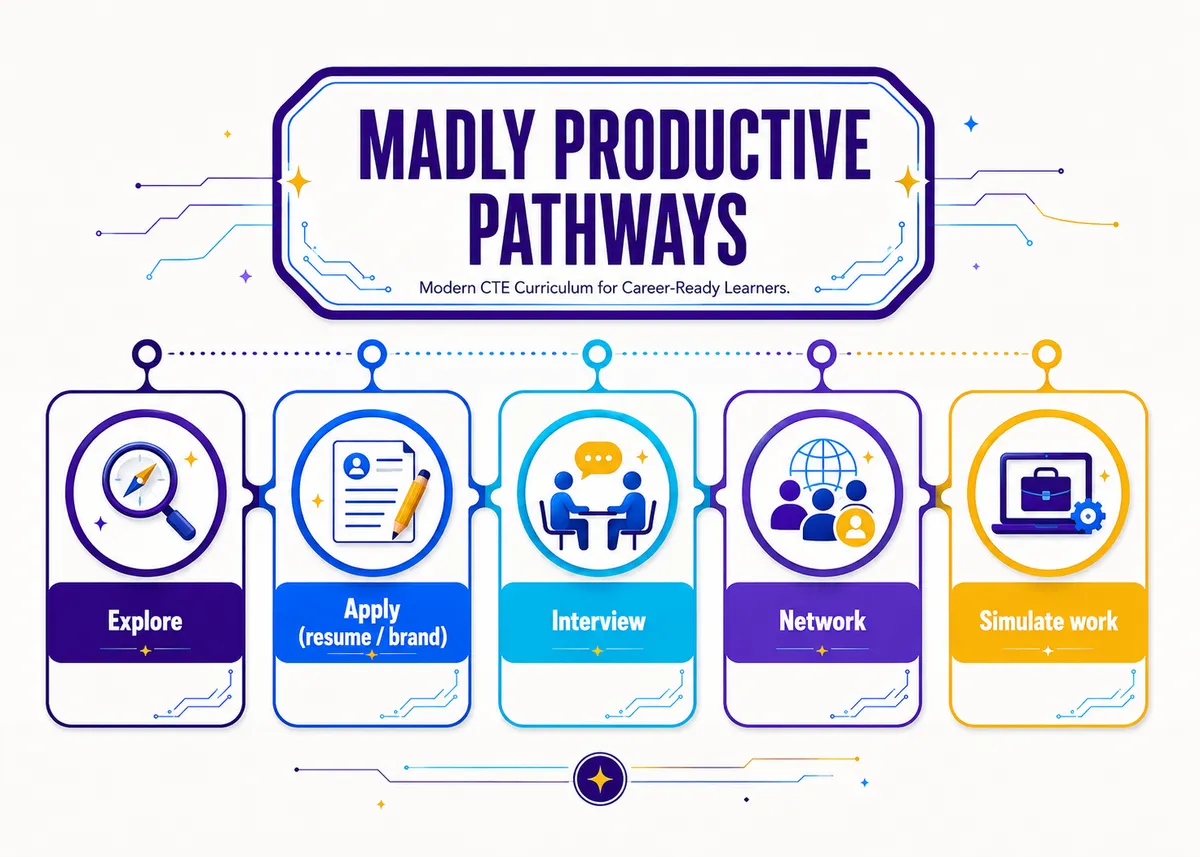
Picture them in five buckets, because “career readiness” as a single blob is what makes it feel like a worksheet. Students explore (who am I, what’s out there), apply (resume and personal brand), interview (perform under pressure), network (talk to humans on purpose), and simulate work (do the job before they have it). Almost every activity here drops into one.
They pair with whatever you already teach: a business class builds the resume around a venture, a tech class interviews for a help-desk role, any class can run an informational interview. Career readiness isn’t a separate course; it’s a layer you run through the content you’ve already got.
What career readiness skills actually matter?
You don’t need to invent your own list. Two frameworks name this territory: the Career Ready Practices (twelve practices like “communicate clearly”) in the national CTE standards, and the U.S. Department of Education’s Employability Skills Framework. You can teach to either without a checklist. The skills in every activity below come down to:
- Communication that holds up live: introducing yourself, answering a question you didn’t see coming, writing a clear, professional email.
- Self-awareness: naming what you’re good at and what you want, without sounding rehearsed.
- Professionalism: showing up, following up, reading a room, taking feedback without taking it personally.
- Initiative: reaching out, asking, trying the thing before someone makes you.
- Problem-solving under a little pressure: the thing a worksheet can never test, because nothing is at stake.
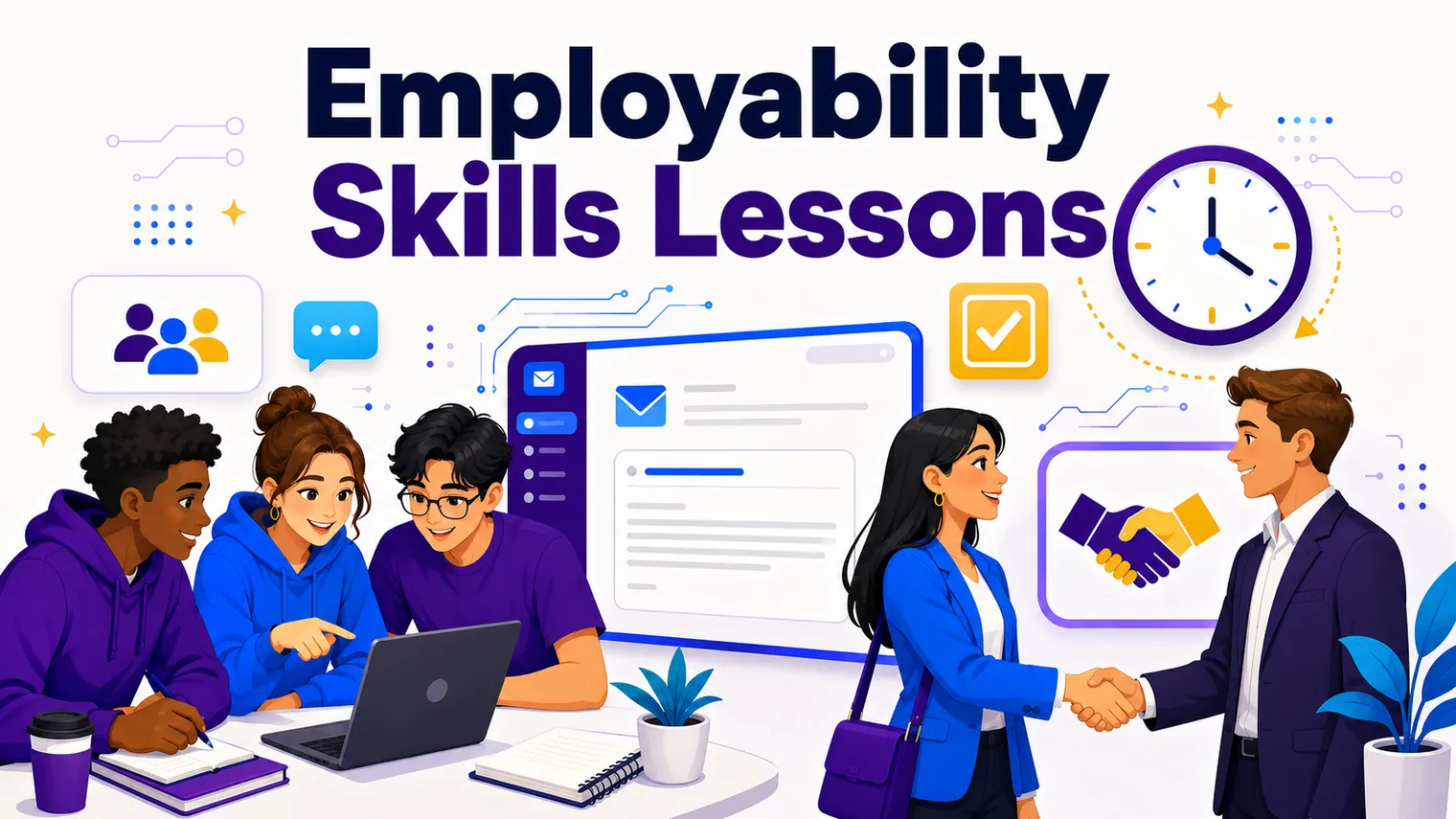
None get built by reading about them. They get built by reps. How to teach and assess each one lives in Employability Skills Lessons for High School; here we put them into students’ hands.
Career exploration and self-assessment activities
Most career units start with exploration and stall there, because “research a career and make a slideshow” is a worksheet with extra steps. Make the output a decision, not a poster.
- The two-truths self-assessment. Students take a quick interest or strengths inventory (the O*NET Interest Profiler or your state’s career site), then write two true sentences: one strength they’d put on a resume, one thing they’re curious about but haven’t tried.
- Reverse the job posting. Students pull a real posting in a field they’re curious about and reverse-engineer it: what does this employer want, which of those do I have, what’s the gap? It turns “exploring careers” into a real read of the market.
- A “future budget” reality check. Students pick a target career, look up its median pay, and build a starter budget (rent, car, the basics). Money makes the abstract immediate.
Each ends with a student who can say “here’s what I might want, and why.”
How do you run a mock interview activity that isn’t terrifying?
Mock interviews are the highest-value activity here and the one students dread most, so the design job is lowering the stakes while keeping the realism: reps before the real thing.
Run it as a mock-interview carousel. Set up stations around the room, each with one common question (tell me about yourself, what’s a weakness, why should we hire you). Students rotate in pairs, one interviewing and one answering, ninety seconds per station. By the end, every student has answered each question several times, which makes the answers automatic and burns off the panic.
To build it out:
- Front-load the “tell me about yourself” answer as its own mini-lesson, the question everyone bombs and every interview opens with. Give them a simple structure (present, past, future: what you do now, what led here, where you’re going).
- Hand out a dead-simple feedback card so the interviewer has a job beyond nodding: one thing that landed, one thing to tighten.
- Run the carousel for the reps, then stage one “real” mock interview at the end with an adult who isn’t you.
- Record one answer if your students can stand it. Watching themselves say “um” fourteen times teaches more than any written feedback.
Match the role to the course: a business class interviews for a marketing assistant, a tech class for a junior help-desk role, so content reinforces career skill instead of competing.
Resume and personal brand activities
A resume from a template is a worksheet; a teardown is a thinking activity. Lead with the teardown.
- The resume teardown. Hand out two versions of the same resume, one weak and one strong, and have students mark up the weak one: what’s vague, what’s missing a number, what’s a responsibility pretending to be an accomplishment. Diagnosing someone else’s makes fixing their own easy.
- Accomplishments, not duties. The most useful resume move for teenagers is turning “worked at the concession stand” into “handled cash and served 100+ customers a game.” Students list three things they’ve done and rewrite each as an accomplishment with a number.
- The personal brand build. Personal brand is “what shows up when someone searches you, and does it match your story?” Students search themselves, then build one clean, professional profile (a LinkedIn build is the natural fit) with a headline and summary that match their resume and interview answer.
- The two-minute intro / elevator pitch. A spoken cousin of the resume: a tight thirty-to-sixty-second answer to “so what’s your deal?” Students draft it, deliver it to three people, and tighten it after each. It’s the most portable career skill there is.
These feed each other: the self-assessment becomes the resume, the resume becomes the profile, the profile becomes the pitch, the pitch shows up in the interview.
Networking and professionalism activities
Networking sounds like something adults do at conferences, but for students it’s a concrete skill: talk to someone who does the thing you’re curious about, and don’t be weird about it. The flagship is the informational interview.
The informational-interview assignment asks each student to find one person in a field they’re exploring (a family friend, a local professional, an alum) and hold a short conversation: how did you get into this, what’s a typical day, what do you wish you’d known. It forces every career skill at once (outreach email, professionalism, prepared questions, thank-you). To keep it from overwhelming anyone:
- Script the outreach email together so nobody stares at a blank message. A clean, professional ask (who you are, what you want, how little time you need) is the lesson.
- Give students a fallback for the kid who can’t find a contact (a teacher’s connection, a volunteer, a recorded interview). Nobody should fail for lacking a network; building one is the point.
- Require the thank-you note. The follow-up is where professionalism becomes real.
Smaller professionalism reps fit anywhere: a “reply to this email” drill where students answer a tricky workplace email (a vague request, a scheduling conflict, a mistake they have to own), or a quick professional-versus-not sort where they decide which voicemail, email, or handshake actually lands.
Workplace simulation and role-play activities
Simulation is where career readiness stops rehearsing for work and starts being work. The student isn’t describing how they’d handle a situation; they’re in it.
- The workplace-scenario role-play. Hand pairs or small groups a realistic on-the-job situation and let them play it out: a customer complaint, a disagreement with a coworker, a deadline that just moved up. The skill isn’t a “right” response; it’s reasoning out loud and staying professional when it’s awkward.
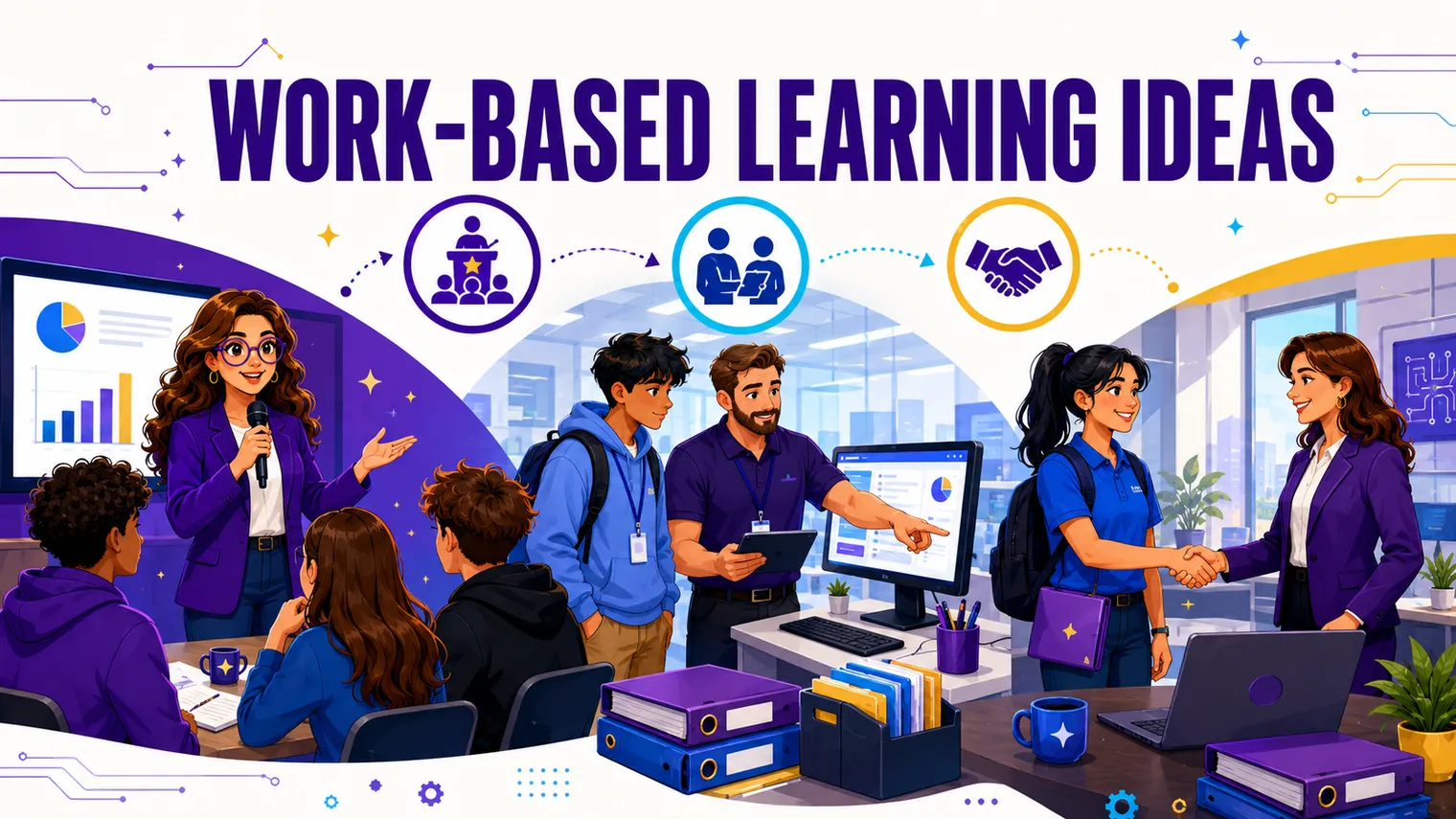
- A class-as-company simulation. For a bigger lift, run a stretch of the course as a workplace: students hold roles, projects have deadlines and “clients,” standups are routine. It makes the soft skills (initiative, communication, follow-through) the mechanics of the room. Work-Based Learning Ideas for High School covers simulation through real work.
- The feedback round. A required, structured moment where students give and receive real feedback on each other’s work (one strength, one specific suggestion). Taking feedback without flinching is an underrated skill, and the only way to practice it is to do it.
How do you teach career readiness without it feeling like a worksheet?
The activities that stick and the ones that flop aren’t separated by topic but by design. Same lesson, different outcomes from a few choices.
| Career readiness that sticks | Career readiness that flops |
|---|---|
| Performed for a real audience (a person, a panel, a profile) | Filled out for the teacher’s eyes only |
| Student choice in the details (their career, their venture, their angle) | One-size scenario handed to everyone |
| Practiced in reps before the high-stakes version | Lectured once, then graded cold |
| Tied to content you’re already teaching | Bolted on as a stand-alone “career day” |
| Ends in a decision, a draft, or a conversation | Ends in a worksheet in the bin |
The biggest lever is the real audience. A resume nobody will read is homework; a resume a local volunteer will critique is worth doing well. An interview with you is a quiz; an interview with an adult they’ve never met is real. You don’t always need an outside human (a peer panel, a recording, or a public profile raise the stakes), but the closer the audience gets to real, the more the room cares.
The second lever is choice. When students pick the career they’re exploring, the venture they’re pitching, or the role they’re interviewing for, the mixed-level room levels itself. The logic from How to Teach CTE (relevance plus autonomy) makes career readiness the part students remember.
How do you fit it into a content-heavy course?
The honest objection: “this is great, but I have a packed curriculum and no spare unit.” Career readiness was never a spare unit; it’s a layer.
- Anchor the technical project to a career skill. The marketing campaign ends with a pitch; the coding project ends with a “defend your build” walkthrough. You’re already running the project; just add the human-facing finish.
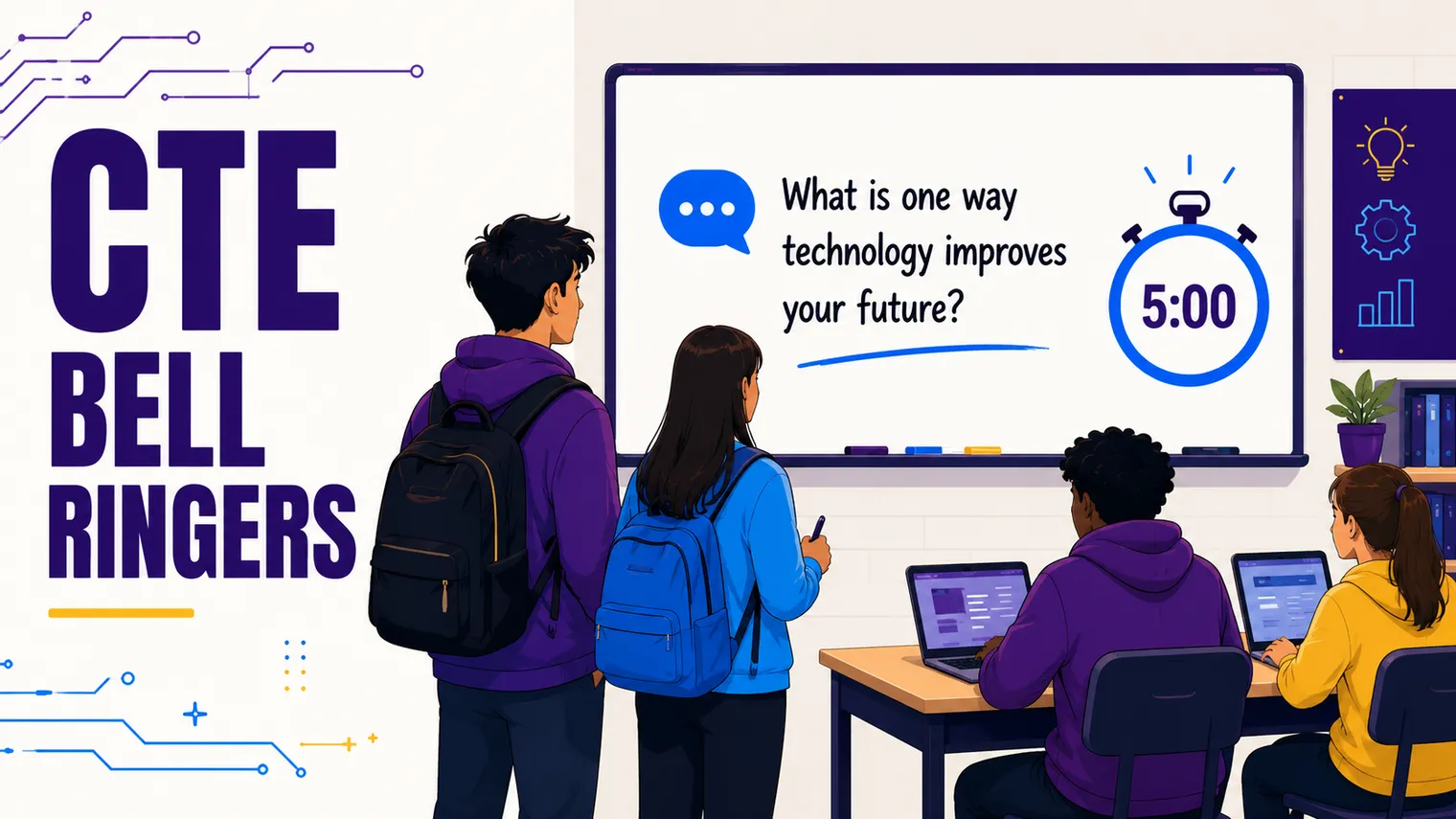
- Use the warm-ups. A two-minute intro to start class, an email drill as a bell ringer, a feedback round at a project’s end. Five minutes a few times a week adds up to a real strand, and it’s how the employability skills work folds in.
- Schedule one or two cornerstone events. The mock-interview carousel and the informational-interview assignment each earn a day or two, ideally where they reinforce content.
And because career readiness is about whether students can do the thing, it belongs in your assessment too: grade the pitch, the interview answer, or the simulated work the way you grade reasoning everywhere else in CTE (more in How to Assess CTE Skills). How to Teach High School Business and How to Teach High School Technology show where these slot into each program.
Free resources to get you started
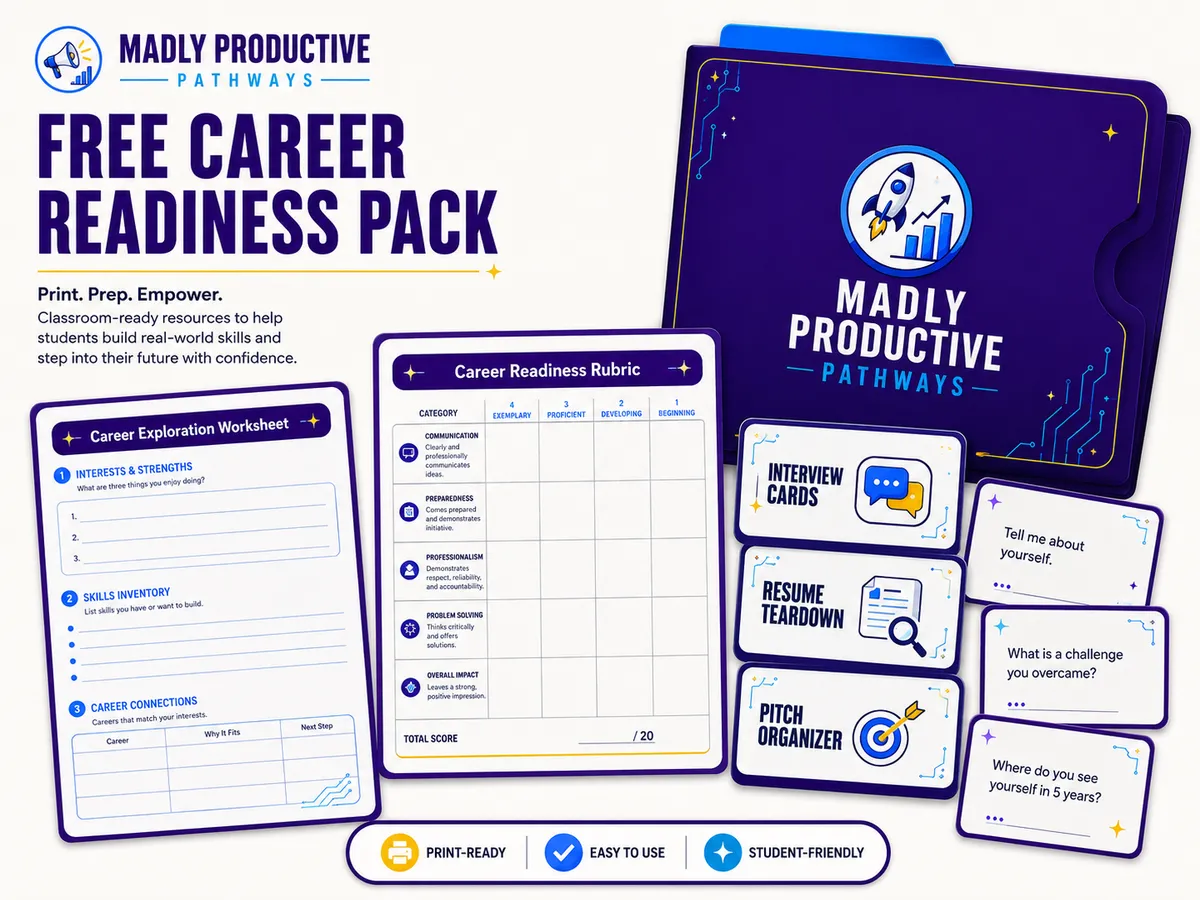
You don’t have to build the interview cards, the resume teardown, and the feedback rubric from scratch the night before. The career readiness pack has no-prep starting points (mock-interview question cards, a resume teardown, an elevator-pitch organizer, a feedback rubric) for any class.
Want career readiness built in? Browse editable, full-year business, technology, and AP Career Kickstart curriculum with career readiness woven in as a layer: the pitches, mock interviews, and simulations live inside the projects instead of getting bolted on after. AP® Business with Personal Finance runs on exactly the kind of real-audience work this guide describes.
Frequently asked questions
What are career readiness activities? The lessons that build the skills students need to land and keep a job (interviewing, resume writing, professional communication, networking, handling real workplace situations) separate from the technical content of any one course. The ones that work get performed, not filled out.
What career readiness skills matter most? Communication that holds up live, self-awareness, professionalism, initiative, and problem-solving under a little pressure. The Career Ready Practices and the Employability Skills Framework name the same territory.
How do you make a mock interview less stressful for students? Run reps before the real thing. A mock-interview carousel (rotating stations, one question each, lots of short answers to different partners) makes the answers automatic before any high-stakes interview.
What’s a good resume activity for high school? Start with a teardown, not a template: have students mark up a weak resume to learn what “good” looks like, then rewrite their own experiences as accomplishments with numbers (“served 100+ customers a game” beats “worked the concession stand”).
How do you fit career readiness into a packed course? Treat it as a layer, not a unit: anchor your technical projects to a career skill (a pitch, a defense, a walkthrough), use short warm-ups a few times a week, and schedule one or two cornerstone events like a mock-interview carousel or an informational-interview assignment.
What is an informational interview assignment? Students find one person working in a field they’re curious about and hold a short, real conversation about how they got there and what the job is actually like. It forces every career skill at once (outreach, professionalism, prepared questions, a thank-you) and connects them to a real human in a real job.
AP® is a trademark registered by the College Board, which is not affiliated with, and does not endorse, this product.