
Soft skills are the part of CTE everyone says matters most and almost nobody plans a lesson for. They get assigned by osmosis: “work in groups, be professional, manage your time,” as if naming the skill were the same as teaching it. Then we are surprised when a senior writes an email that opens with “hey” and closes with nothing, or freezes the first time a group project hits a real disagreement.
These skills are teachable. They just need lessons, the same as anything else. This is the focused guide to teaching employability (soft) skills as things students practice, not things you mention. The broader map of career readiness activities lives in Career Readiness Activities for High School; here we stay narrow, on the soft skills themselves and how to build a real lesson around each one.
What are employability skills, and why teach them explicitly?
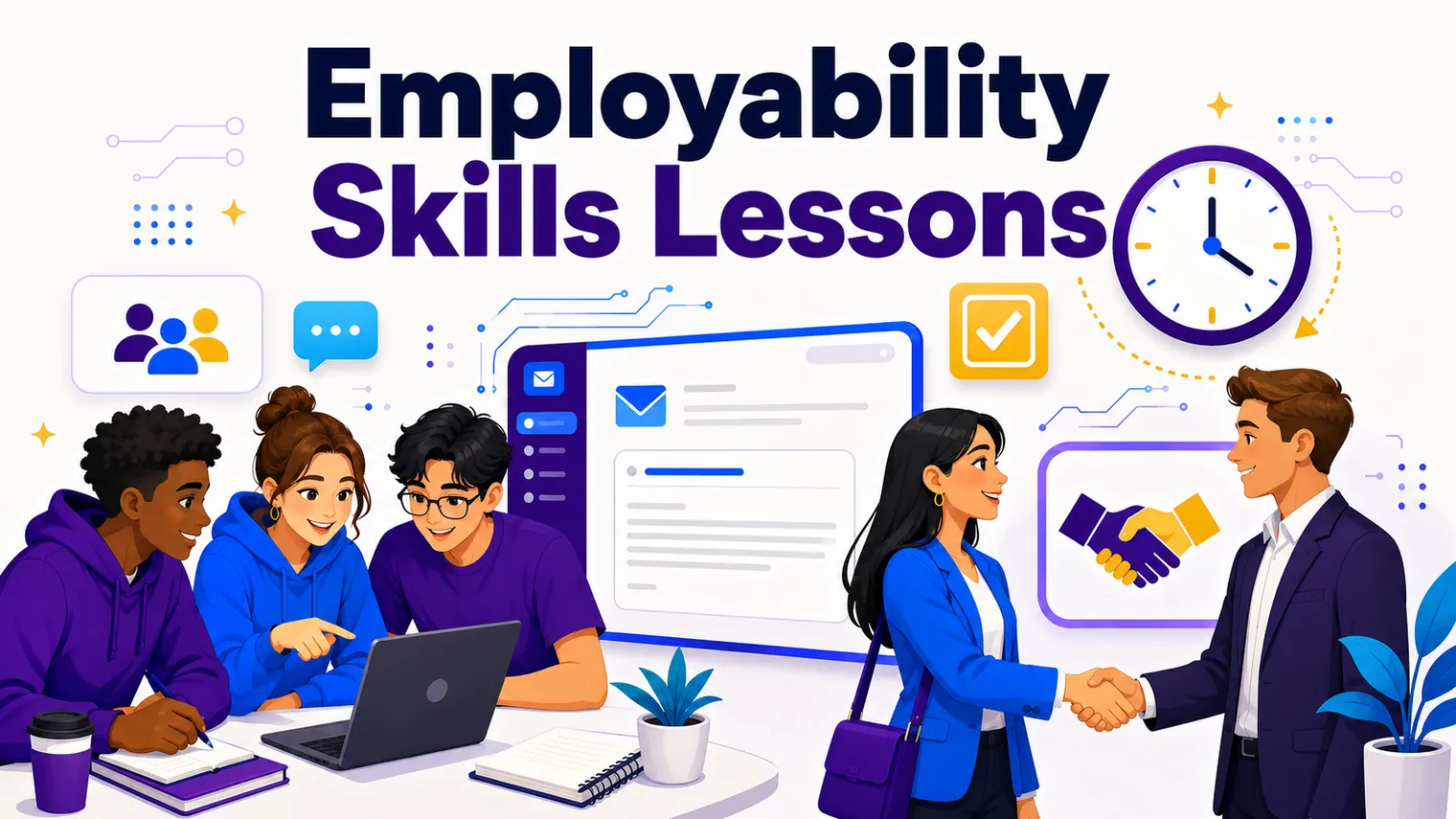
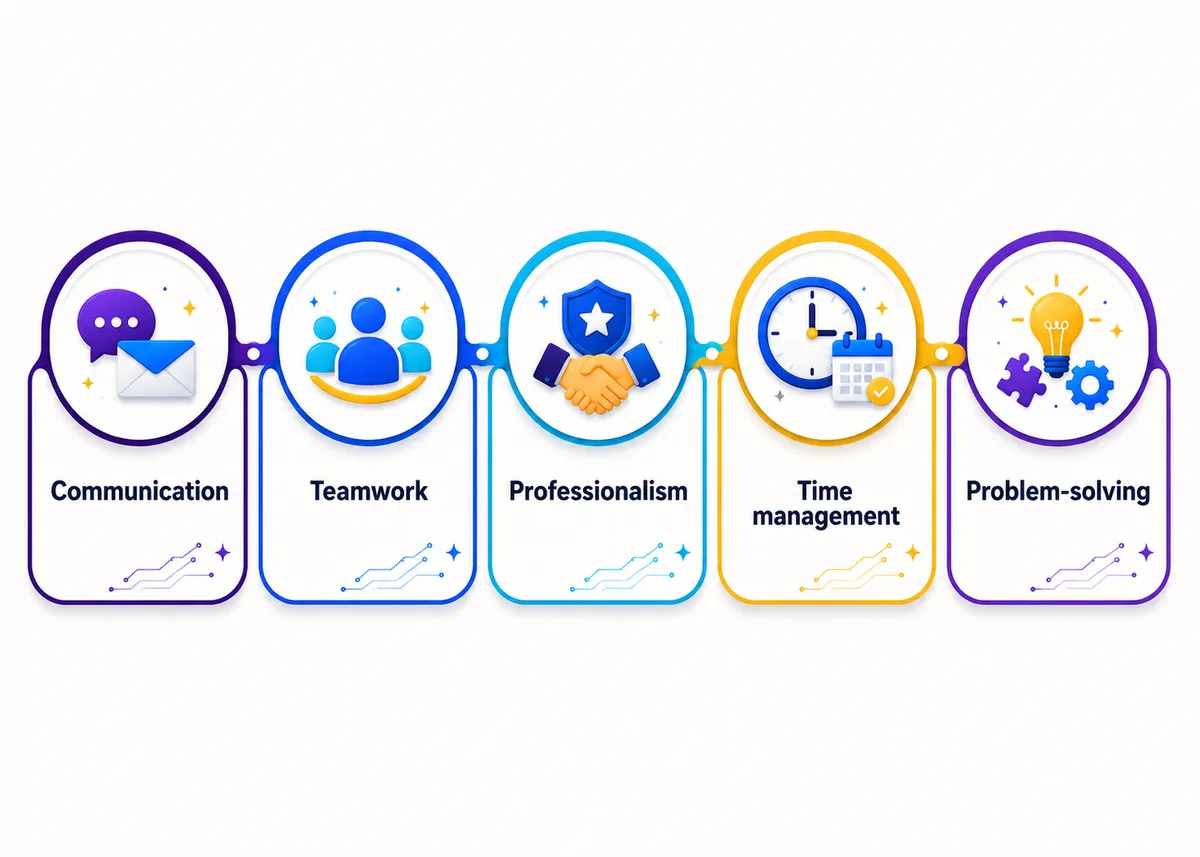
Employability skills are the human-facing skills that decide whether your technical content ever gets used: communication, teamwork, problem-solving, professionalism, time management. The coding or the bookkeeping gets a student the interview. These are what keep the job.
You do not have to invent the list. Two frameworks already named this territory, and they map cleanly onto each other:
- The 12 Career Ready Practices (from Advance CTE) describe the habits of a career-ready person: communicate clearly, act as a responsible employee, work productively in teams, use technology, and so on. They are written to span every career cluster, so they work as a menu you pull from rather than a checklist you march through.
- The Employability Skills Framework (from the U.S. Department of Education) sorts the same skills into applied knowledge, effective relationships, and workplace skills like communication and critical thinking. It was built to help CTE programs teach and assess these, so it points straight at lessons.
The reason to teach them explicitly is simple: implicit teaching only works for the students who already have the skill. The kid who already writes a clean email gets praised for it; the kid who doesn’t never finds out what was wrong. A real lesson levels that, because everyone gets the same model, the same reps, and the same feedback.
How do you teach soft skills as lessons, not lectures?
The failure mode is always the same. We lecture the skill (“here’s what professionalism means”), then assign a task and hope it shows up. Lecturing a soft skill is like lecturing someone on how to swim. The shape of a lesson that actually works looks different:
- Show the contrast. Put a weak version next to a strong version (two emails, two intros, two ways to handle a conflict) and let students spot the difference. Diagnosing someone else’s work is far easier than producing your own cold, and it builds the eye they’ll use on themselves.
- Give them a structure. Most soft skills feel mysterious only because nobody handed students a frame. “Present, past, future” for an intro. “Name the obstacle, try a fix, adjust” for problem-solving. The structure is the lesson.
- Run reps. One try is a quiz. Three tries to three different people is practice. Soft skills are built by repetition, not by understanding, so the lesson has to make room for doing it more than once.
- Debrief. Every activity ends with “what worked, what would you change.” The reflection is where the skill gets named and stuck, which is also what makes it gradeable later.
Keep them short. Most of these are fifteen to thirty minute lessons, not units, which is exactly why they fit a course that’s already full (more on that at the end).
Concrete employability-skills activities and lessons
Here is one real lesson per skill. Each is small, each ends in a student doing the thing, and each can be run next week.
The professional-email teardown (communication). Hand out two versions of the same email: one a student actually wrote (“hey can i get the assignment thx”) and one a clean professional ask (clear subject, a greeting, the specific request, a sign-off). Have students mark up the weak one, then rewrite it. Follow with a live drill: students reply to a deliberately tricky workplace email (a vague request, a scheduling conflict, a mistake they have to own). The skill isn’t politeness; it’s saying the thing clearly without sounding like a robot or a teenager.
The teamwork challenge with a reflection (teamwork). Give small groups a tight, slightly impossible task (build the tallest free-standing structure from index cards in twelve minutes, plan an event on a fake budget, solve a logic problem with split-up clues). The task is the bait. The lesson is the reflection after: each student answers what role they took, one moment the team worked, and one moment it didn’t. Teamwork only gets better when students notice their own part in it, and the reflection is where they do.
The “handle the hard conversation” role-play (professionalism). Pair students and hand each pair a realistic, awkward workplace moment: a coworker isn’t pulling their weight, a manager moved a deadline, you have to tell someone their part has a mistake. They play it out, then swap roles, then debrief: what stayed professional, what slipped, what would a manager think? The point isn’t a memorized “right” line. It’s reasoning out loud and staying calm when it’s uncomfortable, which is the actual job.
The time-management sprint (time management). Give students a realistic stack of tasks with fake deadlines and competing priorities (an urgent email, a long project, a quick favor, a thing due Friday) and twenty minutes to plan an order and defend it. Then change one variable midway (the Friday thing just moved to today) and watch them re-plan. Time management isn’t a planner; it’s prioritizing under pressure and adjusting when things move, and a sprint surfaces both.
The workplace-scenario decision (problem-solving). Hand pairs an on-the-job situation with no clean answer (a customer’s complaint is half-valid, a shortcut would hit the deadline but cut a corner, two coworkers want opposite things). Students decide and write a two-sentence defense: the call and why. Grade the reasoning, not whether they picked your answer. This is problem-solving under a little pressure, which is the one thing a worksheet can never test, because nothing is at stake on a worksheet.
The self-assessment against a rubric (self-awareness). Hand students the same employability rubric you’ll grade them on and have them score themselves honestly first, with one piece of evidence per row (“I met every group deadline, so I’d put myself at proficient here”). It makes the fuzzy skills concrete, gives students a target, and turns the rubric into a teaching tool before it’s a grading one.
How do you assess soft skills?
You assess them by refusing to leave them soft. “Professional,” “good communicator,” “team player”: those are useless on a rubric until you turn them into specific, observable behaviors you could point at in the room.
The move is to name the behavior, not the trait:
| Vague soft skill | Observable criterion you can grade |
|---|---|
| ”Communicates well” | States the request in one clear sentence, with a greeting and a sign-off |
| ”Works as a team” | Took a defined role, met internal deadlines, gave usable feedback |
| ”Professional” | Met posted deadlines, stayed calm in the hard conversation, followed up |
| ”Manages time” | Set a defensible order of tasks and adjusted when a deadline moved |
| ”Solves problems” | Named the obstacle, tried a fix, justified the call |
Pick the two or three a given lesson actually exercises and grade those, not the whole framework. The full method (writing the levels, grading the reasoning, scoring fuzzy skills fairly) is in How to Assess CTE Skills. The short version: if you can’t imagine pointing at it, rewrite the criterion until you can.
How do you weave them into a content course instead of adding a separate unit?
The honest objection is “I have a packed curriculum and no spare unit for soft skills.” Good, because soft skills were never supposed to be a separate unit. They’re a layer you run through the content you already teach.
Three ways to thread them in:
- Bolt the skill onto the project you’re already running. The marketing campaign ends with a pitch (communication). The group build runs on internal deadlines (teamwork and time management). The technical project ends with a “defend your choice” walkthrough (problem-solving). You’re not adding a lesson; you’re adding a human-facing finish to one you’ve got.
- Use them as warm-ups. A two-minute email drill as a bell ringer. A thirty-second intro at the start of class. A feedback round at the end of a project. Five minutes a few times a week adds up to a real strand without ever costing a full lesson.
- Make the soft skill part of the grade. If teamwork and professionalism never show up in the gradebook, students learn they don’t count. Putting two employability rows on your project rubric is the cheapest way to make the skill real, and it’s how the assessment work above actually lands.
These pair with whatever you’re already building. For where the practice gets most real (simulations, real clients, actual workplaces), Work-Based Learning Ideas for High School goes deep on the spectrum from a classroom role-play to a genuine job.
Free resources to get you started
You don’t have to build the email teardown, the role-play cards, and the employability rubric from scratch the night before. The Free Library has no-prep soft-skills starting points (a professional-email teardown, scenario role-play cards, and an employability self-assessment rubric) that drop into any business or tech class. Grab what’s useful, see if the style fits how you teach, and build from there.
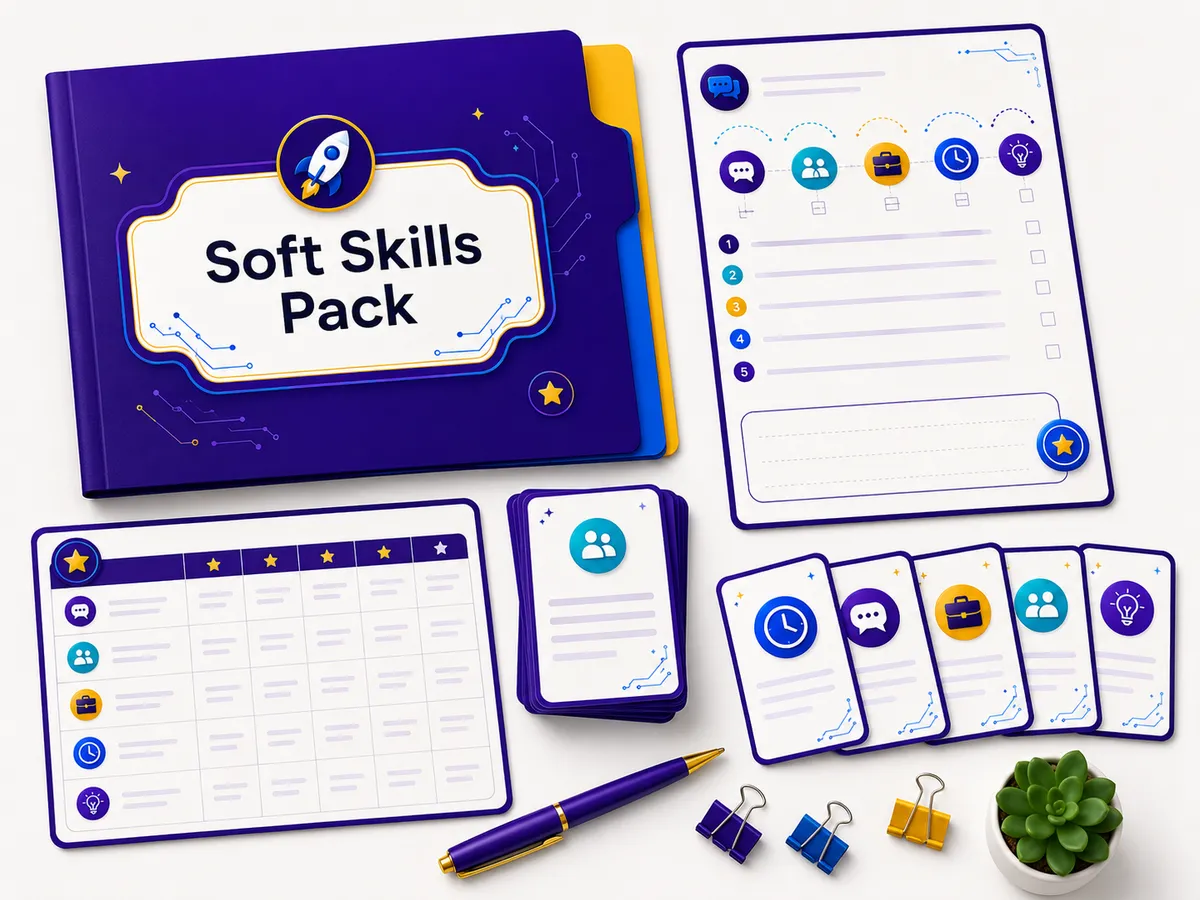
Want the soft skills already woven in? Browse editable, full-year business and technology curriculum where employability is part of the work itself: communication, teamwork, and professionalism run through the projects and show up as named rows on the rubrics. You bring the room; the layer comes threaded in.
Frequently asked questions
What are employability skills? The human-facing skills that decide whether technical content gets used on the job: communication, teamwork, problem-solving, professionalism, and time management. The 12 Career Ready Practices and the U.S. Department of Education’s Employability Skills Framework name the same territory.
Why teach soft skills explicitly instead of just assigning group work? Because implicit teaching only reaches the students who already have the skill. A real lesson (a model, reps, and feedback) gives every student the same shot, instead of rewarding the ones who showed up already knowing it.
How do you teach soft skills as lessons? Show a weak version next to a strong one, give students a simple structure to follow, run several reps to different people, and debrief what worked. The reflection at the end is where the skill gets named and stuck.
How do you assess employability skills fairly? Turn vague phrases into observable behaviors. “Communicates well” becomes “states the request in one clear sentence, with a greeting and a sign-off.” Pick the two or three a lesson exercises and grade those, as covered in How to Assess CTE Skills.
How do you fit soft-skills lessons into a packed course? Treat them as a layer, not a unit: bolt the skill onto a project you’re already running, use short warm-ups a few times a week, and put a couple of employability rows on your project rubric so the skill counts.