AP Cybersecurity: Full-Year Course
$200
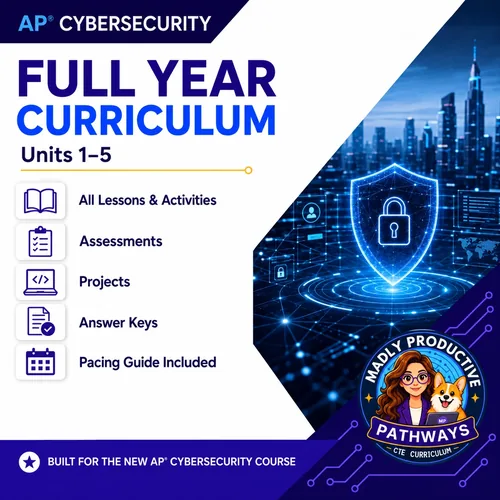
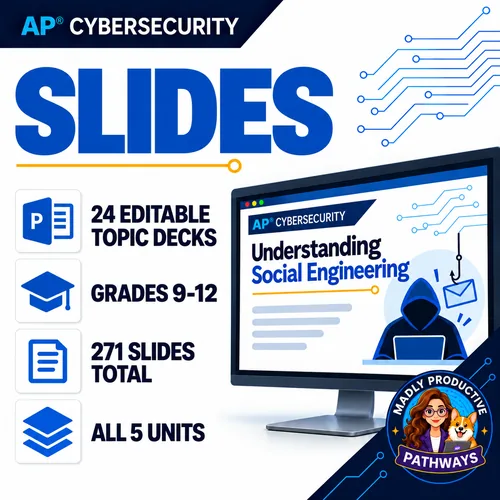
Two ways in. The full AP Cybersecurity year is five units, 24 topic packets, and about 110 class periods, independently aligned to the publicly available AP Cybersecurity Course Framework. Alongside it sits a set of standalone 3-4 day units — phishing, deepfakes and AI scams, malware, password security — that need no cybersecurity background and drop into any class. Editable slides, guided notes, original scenarios, and answer keys for all of it.
The complete AP year in one purchase, or the four standalone cybersecurity units bundled together for less than buying them one at a time.
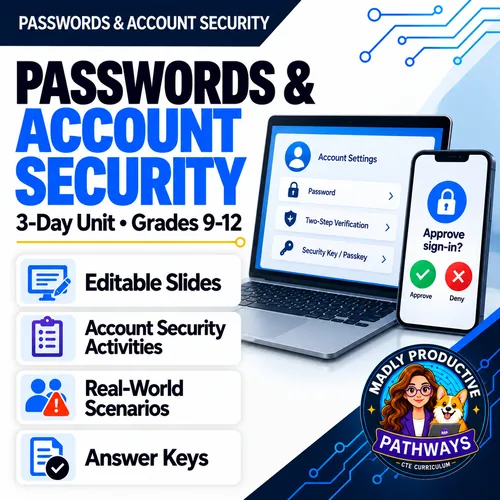
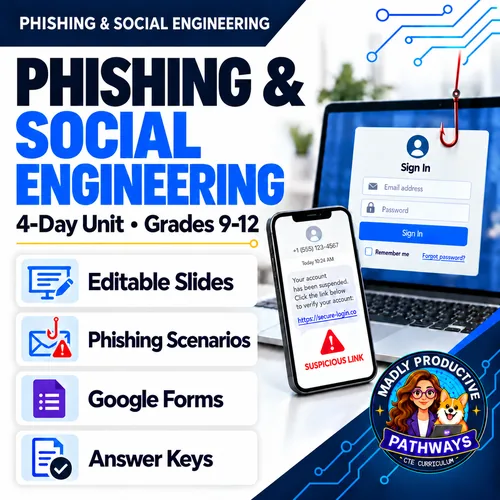
Not every school that wants to teach this is running an AP section, and not every teacher handed the topic has a computer science room. The standalone units are built for that: three or four days each on phishing and social engineering, deepfakes and AI scams, cyber attacks and malware, or passwords and account security. No framework, no prerequisite, and no tech background needed to teach them.
They fit a digital citizenship week, an advisory block, a health or life-skills unit, or the gap in a CTE course where the schedule left one. Each ships the same open-and-teach folders as the AP packets, every page has a key, and the unit quiz and exit tickets come as self-grading Google Forms. Take one unit, or the bundle of four.
Most states got to cybersecurity before College Board did. Texas has Foundations of Cybersecurity, a one-credit course with no prerequisite. Virginia runs Cybersecurity Fundamentals, course 6302, as its introductory course. The sequence here fits either: teach it as your state intro course now, and the AP alignment is already there if the course gets added later.
If you are new to the subject, the AP Cybersecurity teacher's guide covers the units, the official CED, and the May 2027 exam before you spend anything.
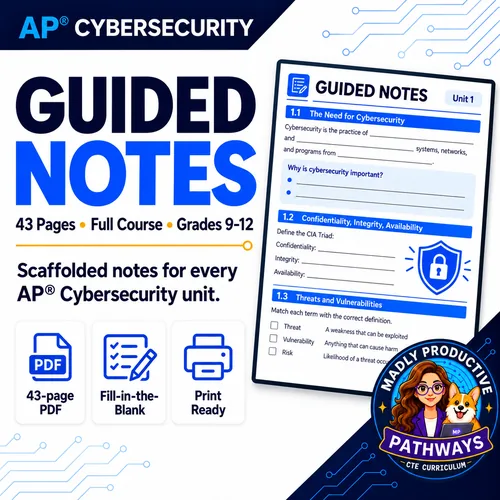
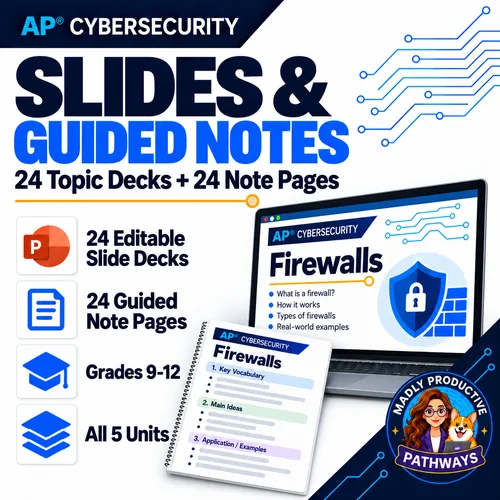
All 24 topics ship the same way, so you learn the layout once in August and it holds through May. A branded slide deck with day-by-day kicker labels, guided notes with a key, an original scenario written for this course, a collaboration activity in editable Word and print-ready PDF, five AP-style multiple choice questions with rationales, a Mini-FRQ with a scoring guide, and a self-grading Google Form.
The folders are numbered in the order you open them: 00 Start Here, 01 Present, 02 Student Handouts, 03 Scenario, 04 Collaboration, 05 Assessment, 06 Answer Keys. Topic 1.1 on social engineering is a free download if you want to see the whole two-day packet, keys included, before deciding.
This is the only course on the site you buy here rather than on TPT. You pay with a card and the zip downloads on the spot, with lifetime access and free updates through the course's first year. There is no account to keep and no login for your students.
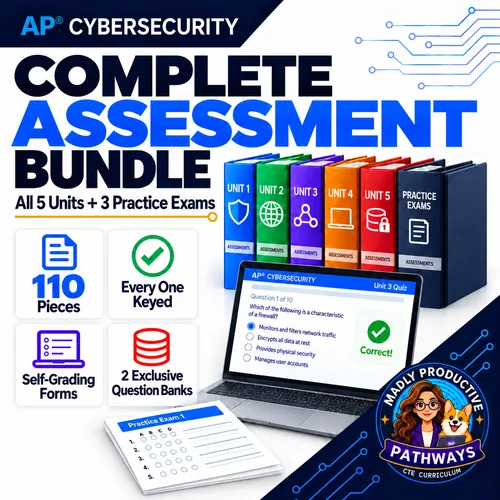
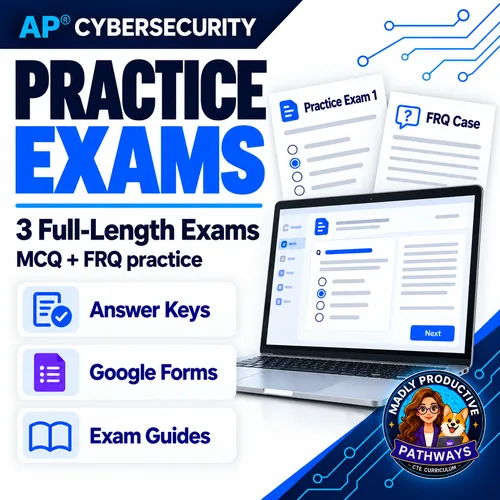
The full course costs less than the five unit bundles bought separately, and it is the only way to get the course-wide bonus folder: three full-length practice exams, MCQ and Mini-FRQ mega banks, a cram pack, a real-world breach case library, no-prep substitute plans, a full-year pacing calendar, a Course Audit and syllabus pack, and a parent letter.
The people handed this course are often business and CTE teachers rather than computer science majors, and the course itself assumes students arrive with no prior coding experience. These materials assume the same about the teacher.
Every packet opens with a READ FIRST guide that says what to print and when, every scenario carries a Teacher Key with facilitation moves and sample answers, and each topic includes a Standards and Skills Map you can point to during the AP Course Audit. Unit 5 is the single largest unit at about 30 class periods, so it is worth pacing backward from there.
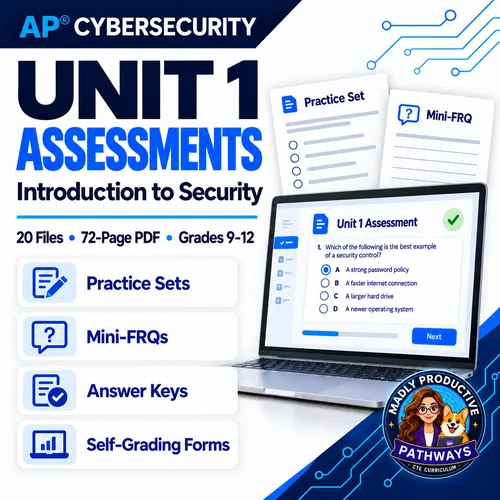
One unit at a time, for less than its lessons cost separately. Each includes a unit review and unit test.
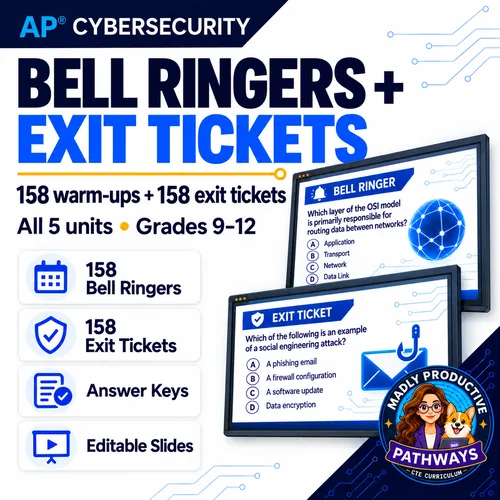
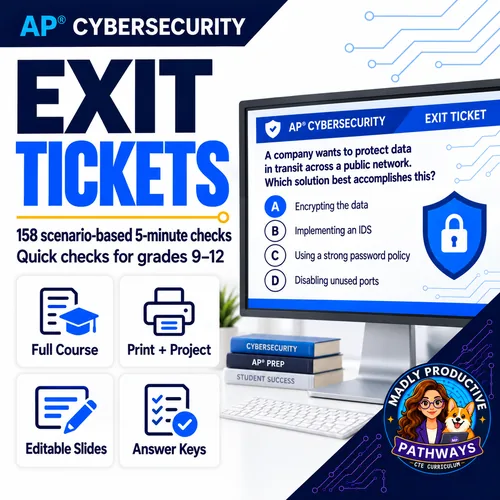
Slides, guided notes, bell ringers, exit tickets and assessments for the whole year, sold on their own.
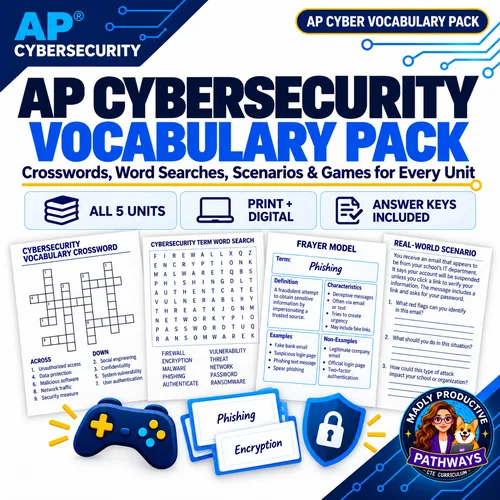
Three or four days each, taught on their own in any order. No AP framework, no prerequisite, and no cybersecurity background needed to run one.
Every course opens with a complete free lesson: the real slides, notes, and activity, not a preview.