

I didn’t take the straight road into teaching, and chances are you won’t either. I started tutoring business students at 17, built my own tutoring business on Wyzant all through college, and took a corporate finance job out of school that I left about as fast as I started it (turns out climbing the corporate ladder wasn’t for me, teaching was the thing I actually loved). I went back for my MBA, designed digital curriculum at Pearson, and reached my own classroom through Florida’s alternative-cert route, not an education degree. So if you’re coming from industry, or you’re already teaching and eyeing a CTE endorsement, this is the map I wish someone had handed me.
The good news up front: there’s no single road into a CTE classroom, a degree in education often isn’t one of the requirements, and with the teacher shortage, districts are actively looking for people with real-world experience. You can usually start sooner than you’d think.
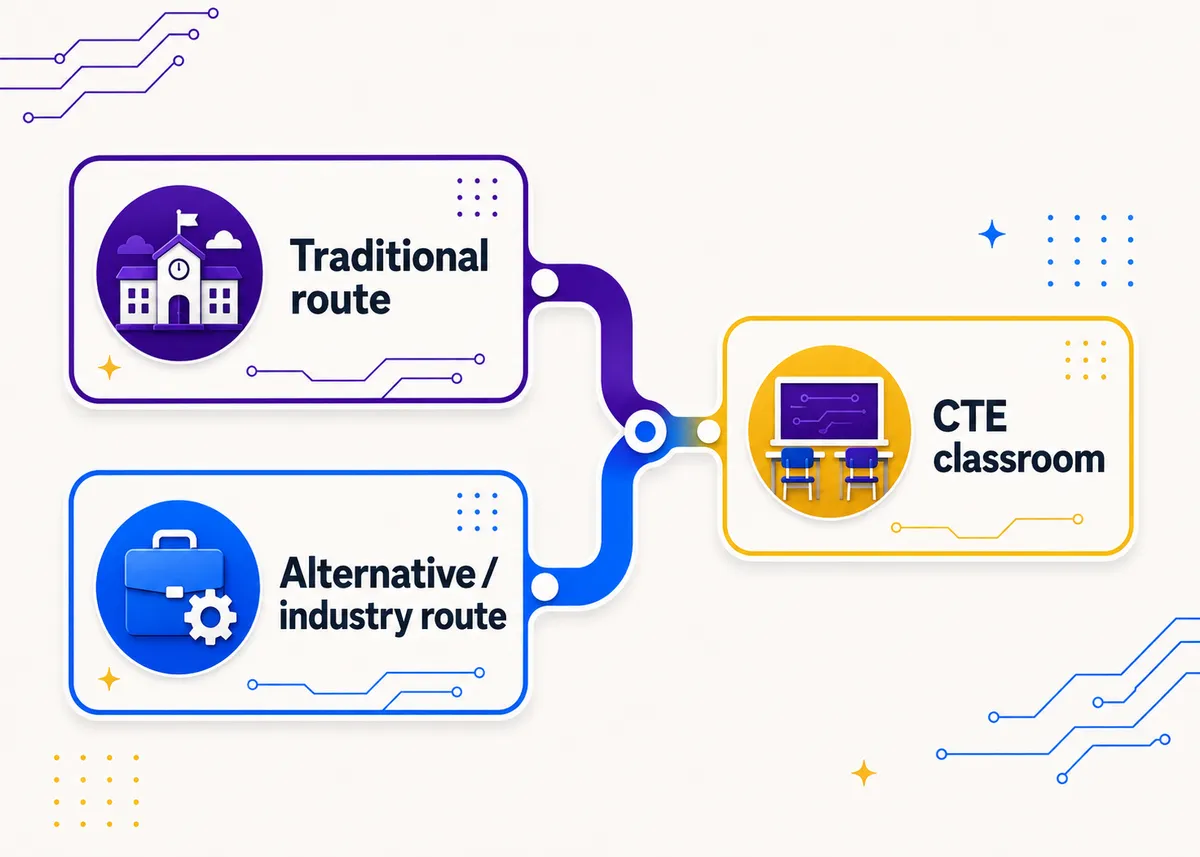
The short version: Most people become CTE teachers through one of two doors: the traditional education-degree route, or an alternative/industry route that trades a teaching degree for work experience plus an on-the-job certification program. Requirements vary by state, but they come down to the same five boxes, and in many states you can land the job first and finish certifying while you teach.
What is a CTE teacher, and why now?
A CTE (Career and Technical Education) teacher prepares students for a specific career field: business, marketing, finance, IT, cybersecurity, health science, the trades, and more. The defining trait is that you’re teaching a job-ready skill, usually drawn from real industry knowledge, not prepping kids for a single academic exam.
Why this is a good moment to make the move: schools are short on teachers, especially in technical fields, and many states have responded by opening faster, cheaper routes in for people who already have industry experience. If you’ve actually done the work in business or tech, that experience is the qualification districts want.
The two doors: traditional vs. alternative route
Almost everyone enters through one of two doors.
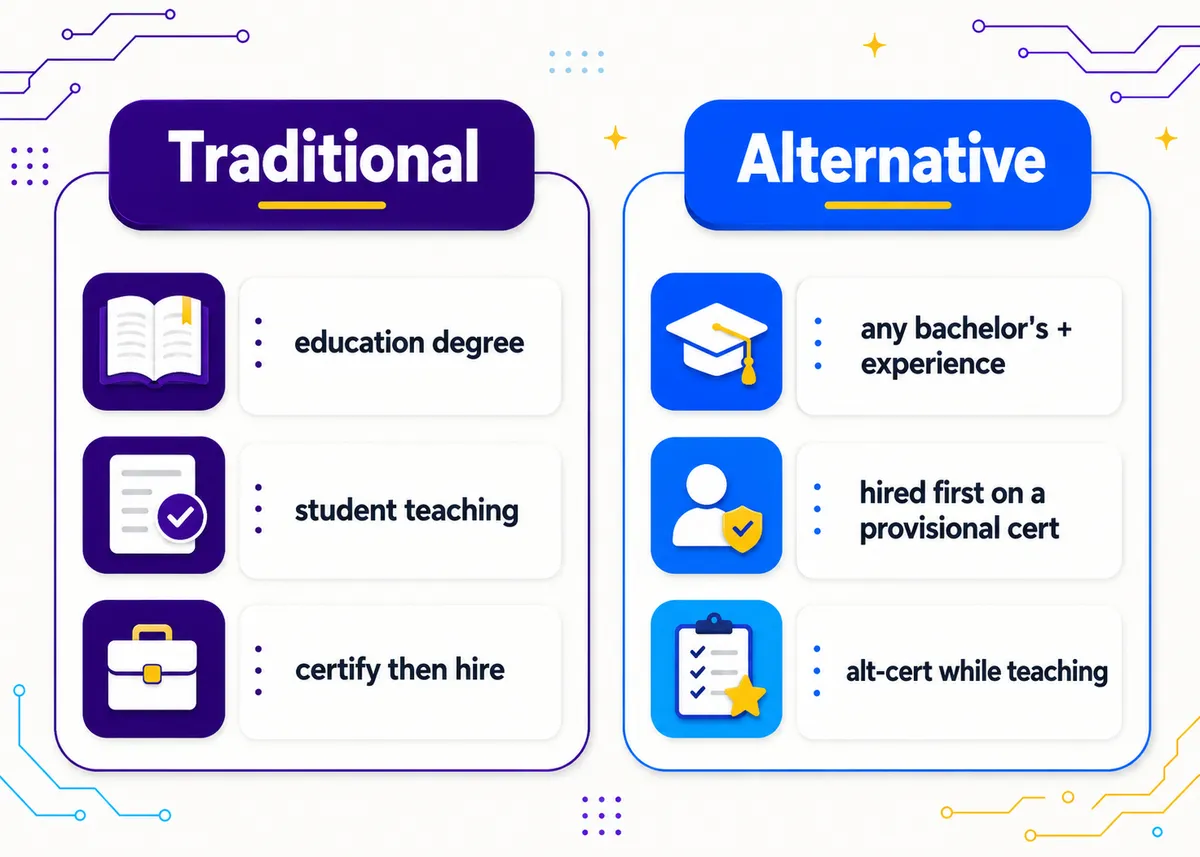
The traditional route is for people who want (or already have) an education degree. You complete a teacher-preparation program, do student teaching, pass your state’s exams, get certified, and then get hired. If you’re a college student who’s sure you want to teach, this is the clean path.
The alternative / industry route is the one most career-changers and degree-holders use. You bring a bachelor’s degree (in anything, often) plus work experience in the field you want to teach. You typically get hired, start on a provisional or transitional certificate, and complete an approved alternative-certification program while you’re already teaching. No education degree required.
Here’s the contrast at a glance:
What states actually require (the five boxes)
CTE certification looks different in every state, but a national study of all 50 found the requirements basically come down to five categories. Wherever you are, you’ll be checking some combination of these:
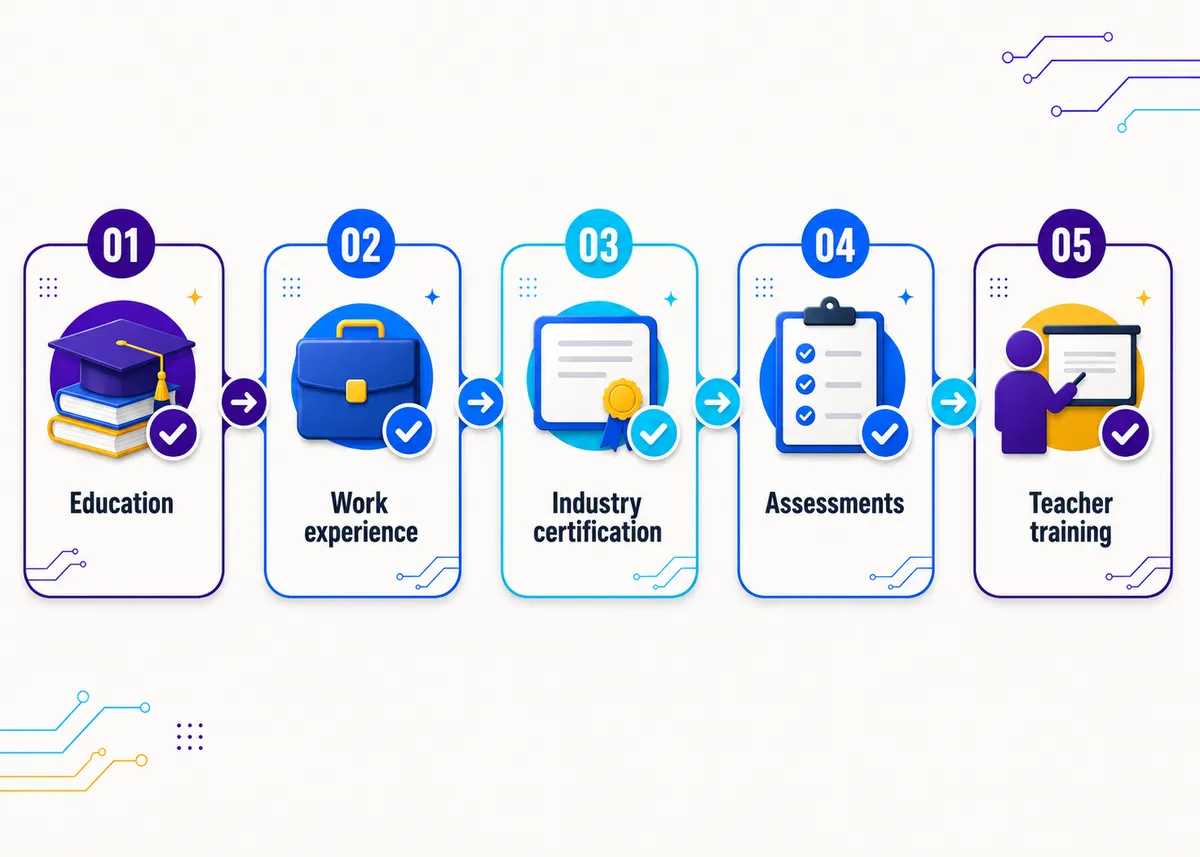
- Education: a high school diploma at minimum, often a bachelor’s, sometimes specific coursework.
- Work experience: a set number of hours or years in the occupational field you want to teach (common thresholds run a few thousand hours, or two to five years).
- Industry certification: holding a recognized license or credential in your field can count.
- Assessments: passing a subject-area and/or basic-skills exam.
- Teacher training: completing an alternative-cert program, professional development, or a mentorship/residency.
The catch worth saying plainly: what qualifies you in one state may not in the next, and within a state the rules can change depending on which CTE subject you want to teach. So treat this list as the shape of the requirements, then verify the specifics with your own state (more on that below).
The shortcut most people miss: get hired first
Here’s the part that surprises career-changers. In a lot of states you don’t have to be fully certified before you can teach. The common pattern is:
- You get a job offer from a district or school.
- That offer lets you apply for a provisional, transitional, or initial certificate.
- You start teaching on that certificate (and earning a teacher’s salary) while you complete the remaining requirements over the next one to three years.
That’s the difference between “I’ll think about teaching in a few years” and “I could be in a classroom this fall.” If a school wants you, the certificate often follows the job, not the other way around.
Becoming a business or tech CTE teacher specifically
If your background is business, finance, marketing, IT, or computer science (which is exactly who this site is built for), you’re in one of the most in-demand and degree-friendly corners of CTE. An MBA, a finance career, a marketing role, an IT certification: these all map cleanly onto business and technology CTE endorsements, and they’re precisely the experience the alternative route is designed to reward.
You generally won’t need to “go back to school” in the traditional sense. You’ll need to document your experience, pass the relevant subject-area exam, and complete an alt-cert program. Your industry years do the heavy lifting.
📍 Madi’s path (one real example) Started tutoring at 17, tutored through Ignite Reading, then built her own business-tutoring practice on Wyzant through college (designing full-year curriculum in econ, entrepreneurship, accounting, and finance to prep students for AP exams, professional certs, and FBLA). Earned a B.S. in business, tried corporate finance just long enough to know it wasn’t for her, and went back for an MBA. Moved into curriculum design at Pearson, then completed Florida’s Educator Preparation Institute (EPI) alternative-cert program while interning at Florida Virtual School (FLVS), teaching computer science and digital business foundations. That led to a full-time FLVS offer, and she now teaches personal finance. The point: there’s no education degree anywhere in that chain. Industry experience, a graduate degree, and an alternative pathway are what opened the door. Your version will look different, but the structure is the same.
Already a teacher? Adding a CTE endorsement
If you’re already certified in another subject, you don’t start over. Most states let current teachers add a CTE area to an existing license, usually through some mix of a subject-area exam, documented work experience, or targeted coursework. It’s often faster than your original certification was, because you’ve already cleared the general teaching requirements.
This is a smart move if you’re a business, math, or tech teacher who wants to teach the higher-interest, career-focused electives (and the AP Career Kickstart courses, more on those below). Check whether your state offers an “add-on endorsement” pathway for the CTE subject you want.
How to find your state’s exact rules
Since this genuinely varies state to state, here’s the reliable way to get your answer instead of a generic one:
- Start at your state’s Department of Education website and search “CTE certification” or “career and technical education endorsement.” This is the authoritative source.
- Look for the alternative or industry route specifically (sometimes called a transitional, provisional, or “business and industry” certificate, or an Educator Preparation Institute / alt-cert program).
- Check the Education Commission of the States’ 50-state CTE comparison for a side-by-side overview if you’re weighing options across states.
- Call a school or district you’d want to work for. They hire CTE teachers constantly and can often tell you the fastest real-world route in your area.
Once you’re in: don’t drown in year one
Getting certified is the first hurdle. Teaching well is the next one, and CTE doesn’t behave like a normal academic class. When you’ve got the job (or the offer), start with How to Teach CTE for the big-picture approach, then the First-Year CTE Teacher Guide for what to set up before day one. If you’re stepping into an AP Career Kickstart course like AP Business with Personal Finance or AP Cybersecurity, What Is AP Career Kickstart? walks through planning those specifically.
Free help to get started
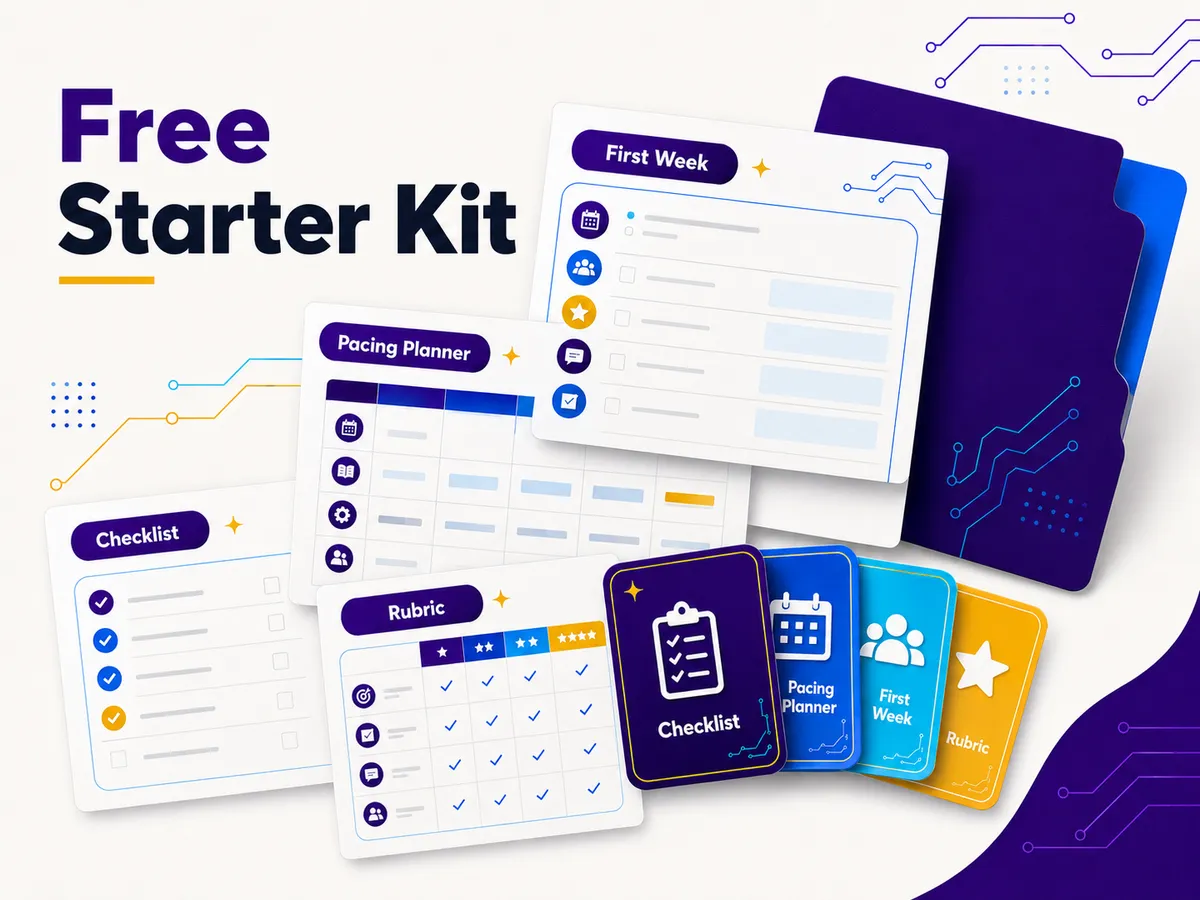
You don’t have to build your first semester from scratch. The Free Library has no-prep starting points (bell ringers, a project rubric, first-week activities, a pacing planner) that work across business and tech classes, so you can walk in with something solid on day one. And once the schedule lands, the editable full-year business and technology curriculum hands a brand-new CTE teacher a year that’s ready to teach, whether that course turns out to be AP® Business with Personal Finance or AP® Cybersecurity.
Frequently asked questions
Do you need a teaching degree to become a CTE teacher? Usually no. Most states have an alternative or industry route that lets you teach CTE with a bachelor’s degree in any field plus relevant work experience, rather than a degree in education.
Can I become a CTE teacher with an MBA or a business degree? Yes, and it’s a strong fit. Business, finance, and marketing degrees plus industry experience map directly onto business and marketing CTE endorsements, which is exactly what the alternative route is designed to reward.
Do you need industry experience to teach CTE? For the alternative/industry route, usually yes: states want a set number of years or hours in the field you’ll teach, because that experience is the qualification. The traditional education-degree route leans on student teaching instead. Either way, check your state’s specific threshold.
How long does it take to become a CTE teacher? Through the alternative route, you can often be teaching within a year, sometimes starting on a provisional certificate as soon as you’re hired, then finishing full certification over the next one to three years while you work.
What’s the difference between a CTE certificate and a regular teaching license? A CTE certificate authorizes you to teach specific career and technical subjects and weighs your industry experience heavily. A standard academic license is built around an education degree and academic subject areas. The exact rules and names vary by state.
Can a current teacher add a CTE endorsement? Yes. Most states let already-certified teachers add a CTE subject area through some combination of a subject exam, documented work experience, or coursework, and it’s often quicker than initial certification.
How do I become a CTE teacher in my state? Start at your state Department of Education’s CTE certification page, look specifically for the alternative or industry route, and ask a local district what pathway they hire through. Requirements differ by state and by subject.
AP® is a trademark registered by the College Board, which is not affiliated with, and does not endorse, this product.