
Someone (maybe your principal, maybe a colleague who just left, maybe you, in a moment of optimism) decided your program needs a Career and Technical Student Organization. Now you’re the advisor, the chapter doesn’t exist yet, and the paperwork is staring at you.
Good news: starting a CTSO chapter is real work, but it’s bounded work. You charter once, you recruit once a year, and most of what feels overwhelming at the start becomes routine by spring. This is the new-advisor walkthrough: what a CTSO is, which one fits your program, and a concrete startup sequence you can run without setting yourself on fire.
One thing up front, and we’ll repeat it because it matters: exact steps, deadlines, and dues vary by state and by year. Treat everything here as the shape of the process, then confirm the specifics with your state association before you commit.
What is a CTSO and why start one?
A CTSO is a student organization tied to a career field, with competitive events, leadership roles, and a national structure behind it. It’s not a club someone invented in your building; it’s the local chapter of a national organization, which is exactly what makes it valuable.
For a CTE teacher, a chapter turns the vague goal of “career readiness” into something students can point at: a competition with a real deadline, an officer role with real responsibility, a reason to care beyond a grade. The kid who shrugs at a marketing worksheet will rewrite their pitch six times if it’s going to a regional competition. That shift is the whole reason advisors put up with the paperwork.
It also gives your program a spine to grow around. (For where this sits in building a business program, the start-here business guide is the cornerstone this post lives under.)
Which CTSO fits your program?
You don’t get to pick from all of them in a vacuum. The right CTSO is the one that matches what you teach, and in most cases the choice makes itself.
| CTSO | Best fit for | Focus |
|---|---|---|
| FBLA | Business and finance courses | Business leadership, finance, management |
| DECA | Marketing courses | Marketing, sales, hospitality, entrepreneurship |
| SkillsUSA | Trade and technical programs | Skilled trades, technical, and industrial careers |
| BPA | Business and IT courses | Business administration and information technology |
A few notes to sort it out:
- FBLA (Future Business Leaders of America) is the big one for business programs, with more than 187,000 high school members nationally. If you teach Intro to Business, finance, management, or the AP Business with Personal Finance curriculum, this is usually your answer.
- DECA is the marketing organization. If your courses lean toward marketing, sales, or entrepreneurship, DECA’s role-play and presentation events fit like a glove.
- SkillsUSA serves trade and technical programs (construction, automotive, welding, IT support, health science). If your students work with their hands and tools, this is the one.
- BPA (Business Professionals of America) overlaps with FBLA and skews toward business administration and IT, a common fit for programs heavy on computer applications and office tech.
If your program straddles two of these, talk to your CTE director and your state associations before deciding. Some schools run more than one chapter, but that’s a year-three problem.
How do you actually start a chapter?
Here’s the honest startup sequence. You will not do all of it in week one, and you shouldn’t try to.

-
Get admin buy-in first. Before anything else, get your principal and CTE director on board, in writing if you can. You’ll need their sign-off for fees, travel, and fundraising, and “the principal already approved this” makes every later step easier. Come with the short version: what the organization is, what it costs, and what it does for the school’s CTE numbers.
-
Contact your state association. Every national CTSO runs through a state association, and that’s where the real instructions live. Find your state’s website, email the state adviser, and ask for the new-chapter packet. This is the single most important step, because they’ll hand you the exact paperwork, deadlines, and dues for your state and year (which, again, vary).
-
Charter the chapter. Chartering is the official “this chapter now exists” step. It usually means submitting an application, paying a chapter affiliation fee, and registering with the national organization through your state. Your state packet walks you through it. Once chartered, you have access to competitions and materials.
-
Recruit your first members. You don’t need a crowd. Pull from the classes you already teach (your captive, interested audience) and aim for a small committed group over a big flaky one. Ten to fifteen genuinely interested students beats forty names on a sign-up sheet who never show.
-
Set dues and handle the money. Members pay national, state, and sometimes local dues, and the totals vary by state and year. Decide early whether students pay their own dues or you’ll fundraise to cover them. Collect and track it through your school’s activity account, and keep it clean from day one. (Check your district’s rules for student-organization funds.)
-
Plan a light first year. Pick a few things to actually do: a couple of meetings a month, one fundraiser, one competition. That’s a complete, respectable year one. Resist the urge to add a community service project, a fall conference, and a banquet all at once.
-
Enter a few competitive events. Competitive events are the heart of every CTSO, and they’re what hook students. For year one, pick two or three that match your strongest students and your content, learn the format, and go. You’ll lose some, place in others, and learn more than any guide can teach you. Next year you enter more.
That’s the spine. Steps one through three make the chapter exist; four through seven make it run.
How do you run it without burning out?
The fastest way to quit being an advisor is to treat year one like year five. A few things keep it sustainable:
- Do less, on purpose. One fundraiser, not four. A handful of events, not the whole catalog. You can skip the state conference your first year and still be a good advisor.
- Make students do the work. Let students run it. Officers handle the agenda, the fundraiser, the social media. Your job is to advise and sign things, not to do their jobs. (A chapter where the advisor does everything isn’t teaching leadership anyway.)
- Steal from the chapter next door. Other advisors in your state have already solved every problem you’re about to hit. Find the local network, ask the dumb questions, and copy what works.
- Protect your calendar. Put meeting dates and competition deadlines on a calendar in August and guard them. The burnout comes from surprises, not from the work itself.
The same engagement logic that runs through all of CTE applies here: give students real responsibility and real stakes, and they carry more of the load than you’d expect. That’s why a CTSO pairs so well with the hands-on career readiness activities you’re probably already running in class.
What does year one realistically look like?
Honestly? A little bumpy, and that’s fine. You’ll miss a registration window by a day and discover a competition format the night before. Everyone does.
A realistic, successful first year looks like this: a chartered chapter, a small core of committed students, a working set of officers, one fundraiser that mostly covered dues, and a first trip to a regional or state competition where a few students placed and the rest learned what it’s like. That’s a win.
What it does not look like: a packed competition slate, a polished banquet, and a forty-student roster. Those come later, built on the foundation you lay this year. Every thriving chapter started with one small, slightly chaotic year. The only real mistake is trying to do all of it at once and quitting in October.
If you’re juggling this on top of being new to the classroom entirely, the first-year CTE teacher guide covers how to keep the whole plate spinning.
Free resources to get you started
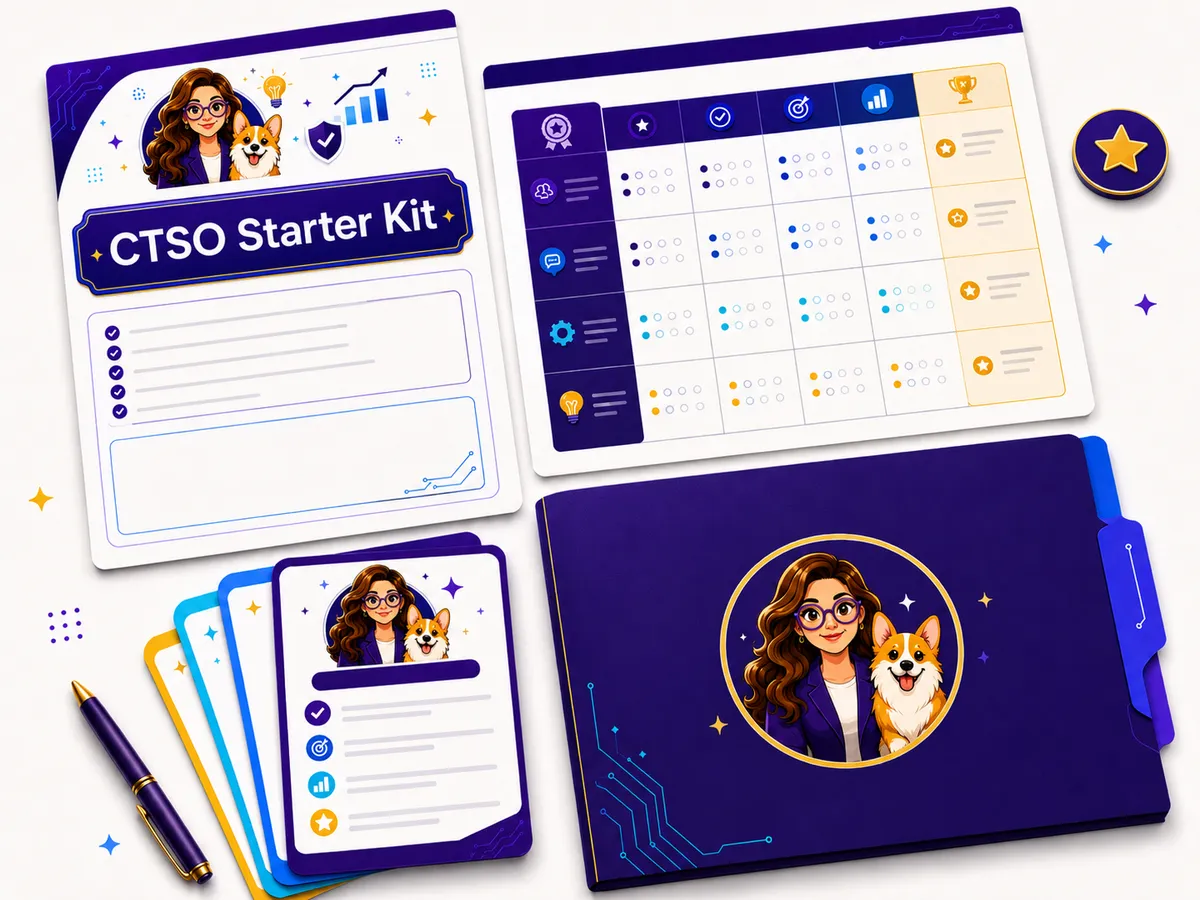
You don’t have to build your recruitment pitch, your first meeting agenda, and your dues tracker from scratch the week school starts. The Free Library has no-prep starting points for advisors and CTE teachers (meeting templates, planning tools, first-week materials) that take the blank-page pressure off. Grab what’s useful, including the CTSO advisor starter kit, and build from there.
Want the planning done for you? A new chapter eats prep hours, and the easiest place to win them back is your course planning. The editable AP® Business with Personal Finance curriculum comes with the units and projects already mapped, which frees the hours a chapter actually needs in year one.
Frequently asked questions
How long does it take to start a CTSO chapter? The chartering paperwork itself can move quickly once your admin signs off, but plan in terms of a school year, not a week. Most advisors charter in late summer or fall and run their first real activities and competitions across the rest of the year. Deadlines vary by state, so check your state association early.
How much does it cost to start a chapter? Costs include national and state dues, often a chapter affiliation fee, and any competition or travel expenses. The exact amounts vary by state and year, and many advisors fundraise to cover student dues. Your state association’s new-chapter packet has the current numbers for your state.
Which CTSO is right for a business class? For most business and finance programs, FBLA is the standard fit. If your courses lean toward marketing, DECA is the better match, and business and IT programs sometimes go with BPA. When in doubt, ask your state CTE director and the state associations.
Do I have to do competitions my first year? Competitive events are the core of a CTSO and are worth doing, but you can start small. Two or three events that fit your strongest students and your content is a perfectly good first year. You scale up once you know how the format works.
Can I run a chapter as a brand-new teacher? Yes, plenty of advisors start in their first or second year of teaching. The key is to keep year one light, lean on your state association and nearby advisors, and let students carry real responsibility instead of trying to do everything yourself. If you are also new to the classroom, the first-year CTE teacher guide covers how to keep the whole plate spinning.