

Career Interest Survey
 Career Readiness Grades 8–12 One class period 20 deliverables
 A real career interest survey your students actually take, not a worksheet pointing at somebody else's website. 48 items, six interest areas, a self-scoring page, and a match to the 14 national Career Clusters. Runs in one class period, on paper, with no devices and no logins. An auto-scoring Google Form version is included for when you want the class data.
● Instant download · Lifetime access · Editable & print-ready
 Editable formatsWord, PowerPoint, PDF & Google
 Zero tech by defaultPaper, pencil, self-scoring
 Auto-scoring formSix area totals into a spreadsheet
 Code to clustersThe step most tools skip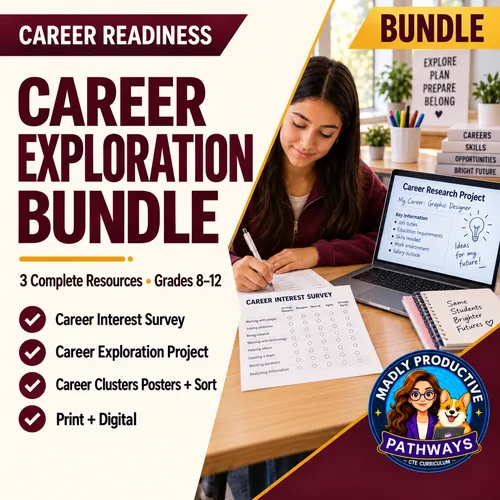
What does this lesson cover?
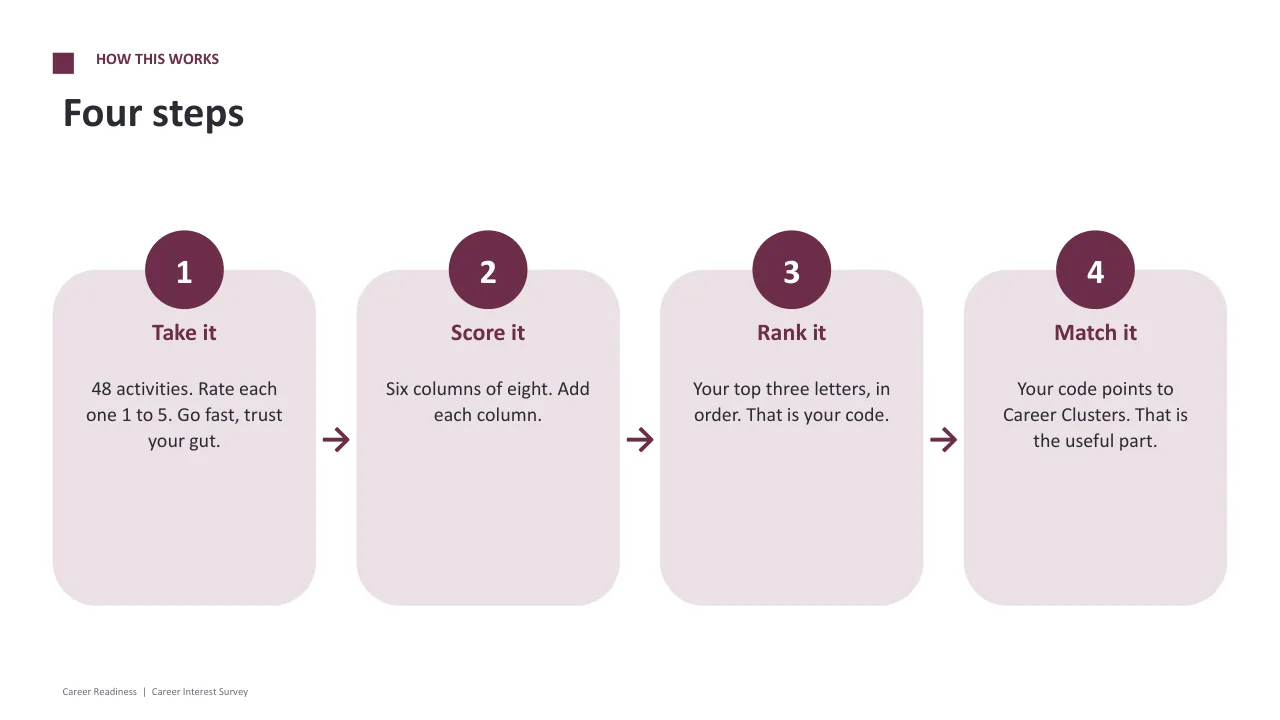
One class period, start to finish: students rate 48 items across six interest areas, total their own scores on a six-column page in about three minutes, read what their top three letters mean, and turn that three-letter interest code into named Career Clusters they can go look up.
The instrument is in the file. Most career interest inventory resources are a slide deck telling students to go take a free quiz on an outside site, and then the site changes and the links rot and you find out in fourth period. This one works the same in September as it will in three years, and it works on a sub day, on testing week, and when the wifi is down.
It is also honest with students about what it is. The framing on the first page says plainly that the survey measures what you like doing, not what you are good at and not what a job pays. No personality typing, no job title handed down as a verdict.
The cluster content is current. The National Career Clusters Framework was modernized to 14 clusters and 72 sub-clusters, and states began aligning federal Perkins data to it in the 2025-26 school year. Nearly every clusters resource still on the market teaches the retired 16, so a 16-to-14 crosswalk ships with this one and you can work from either list.
Everything that's included
 00 Start Here: Teacher
- Read-First teacher guide: how the instrument works, what the scores mean, and the framing to give students first
- One-period lesson plan with minute-by-minute pacing, three ways to run it, differentiation, and a second-day extension
- Skills and alignment map with a blank column for your own state standards
 01 Present
- A 14-slide editable deck to run the period
 02 The Survey
- The 48-item Career Interest Survey, 8 items per interest area, print-ready
- Editable Word version so you can adjust the wording for your students
- Self-scoring page: six columns, totaled by the student in about three minutes, with nothing for you to grade
 03 Results and Clusters
- The Six Interest Areas guide: what each letter means and what it says about you
- Cluster Match Sheet: turns a three-letter interest code into named Career Clusters
- The 14 Career Clusters reference, with sample jobs, the education actually required, and the high school courses that lead there
- One-page results profile students keep for a portfolio or a four-year plan, print and editable
 04 Reflection and Next Steps
- Four reflection questions written to handle the surprising result, not just the expected one
- A one-page action plan that hands off cleanly to a career research project, print and editable
05 Digital: self-grading Google Forms™
- The whole survey as a self-scoring Google Form: it computes every student's six area totals, their interest code and their top area into a spreadsheet
- A short paper-to-digital form, so students who took it on paper still land in your class data
06 Teacher Tools
- Class results tracker: every student's code on one page
- Discussion guide, including the four conversations you will actually have (“this is wrong, I already know what I want to do”)
- 16-to-14 Career Clusters crosswalk: every retired cluster mapped onto the current framework
See the actual pages
Page one of four real files out of the download, exactly as they print.
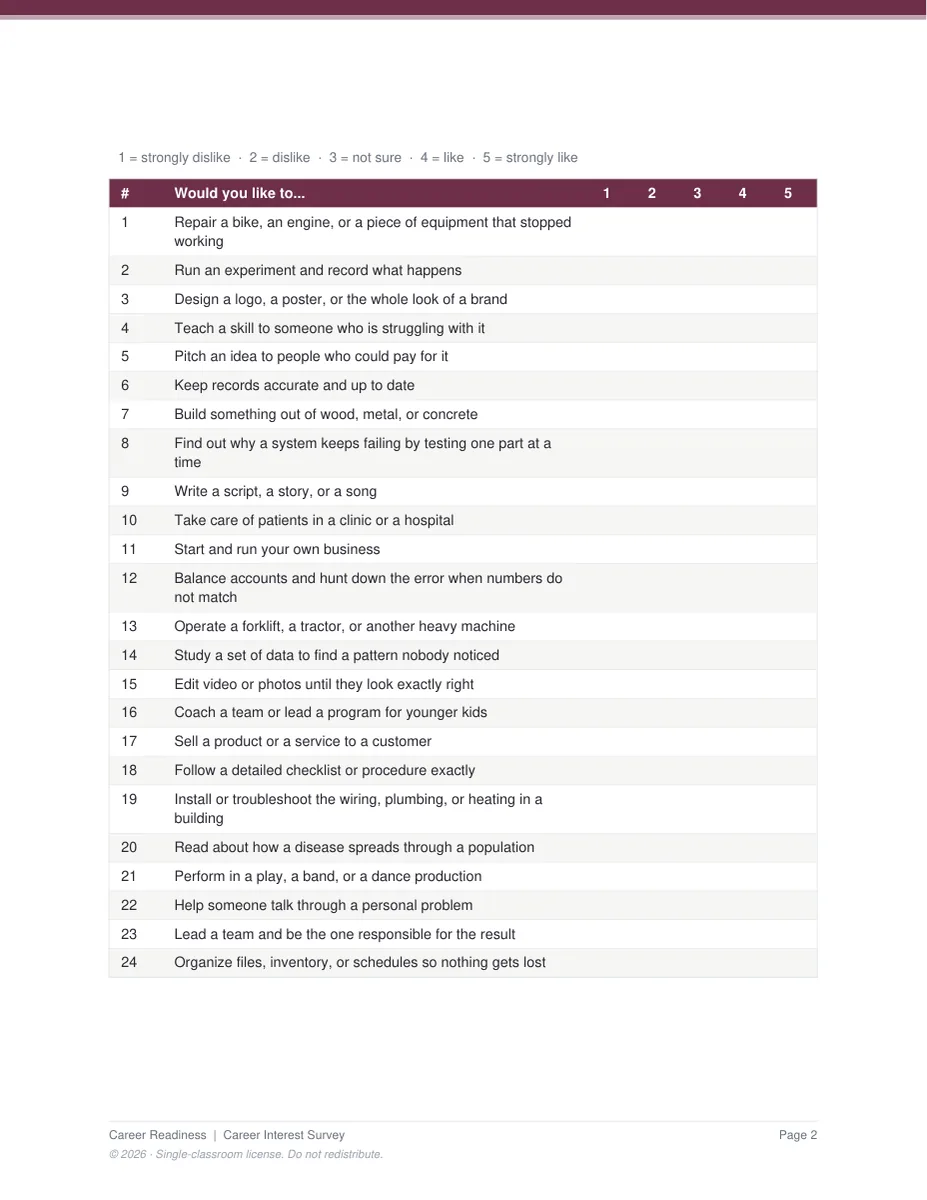
48 items, six interest areas
Eight items per area on a 1-to-5 scale, written about the activity rather than about whether a student thinks they would be good at it. Fifteen minutes, independent and quiet, and skipping an item is the only thing that breaks it.
- ✓ 48 original items, 8 per interest area
- ✓ Print-ready PDF and editable Word
- ✓ No outside site, no student accounts
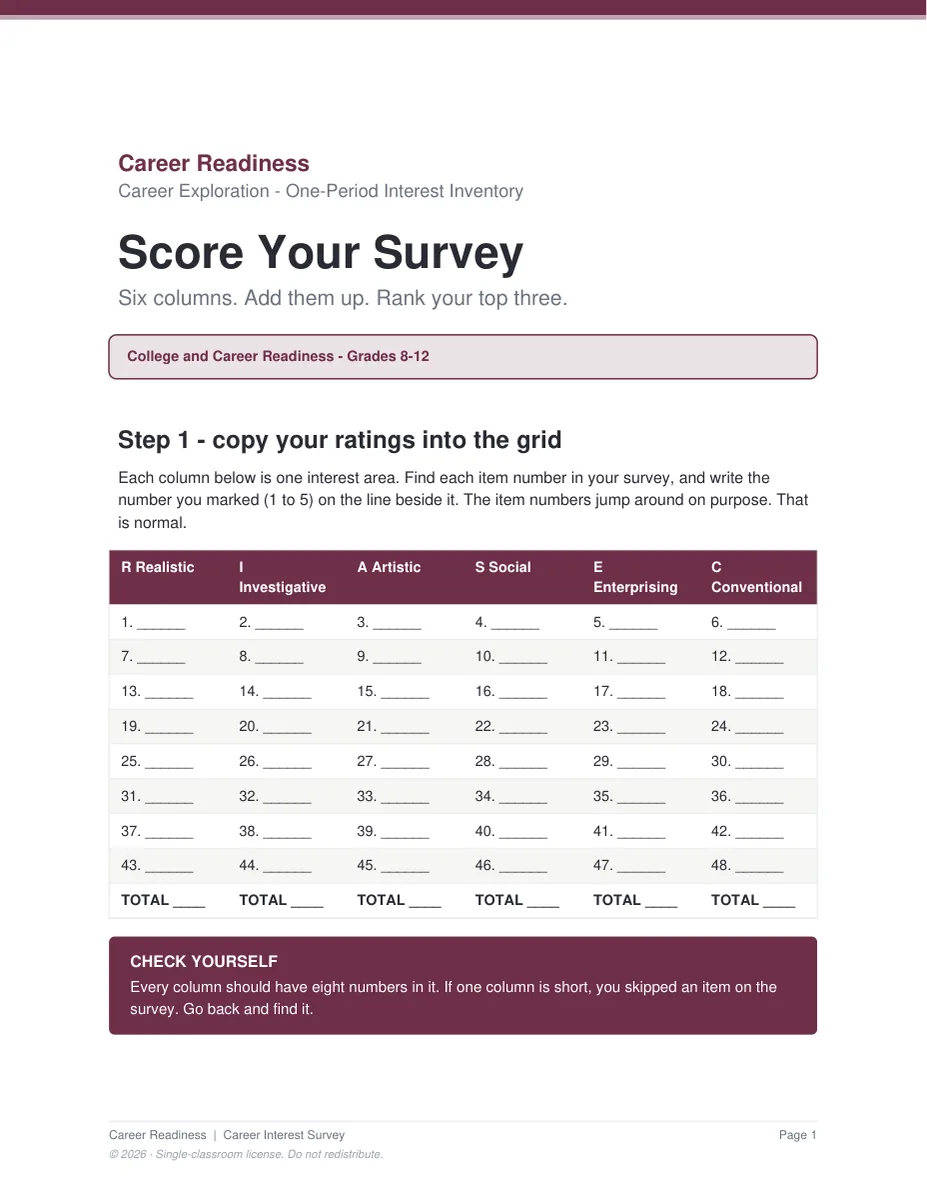
Six columns and about three minutes
Students copy each rating into a six-column grid and total the columns themselves. There is no answer key and nothing for you to mark. Walk the first column together, then circulate and look for short columns, which mean a skipped item.
- ✓ Self-scoring, no teacher grading
- ✓ Top three letters become the interest code
- ✓ Short columns flag a skipped item at a glance
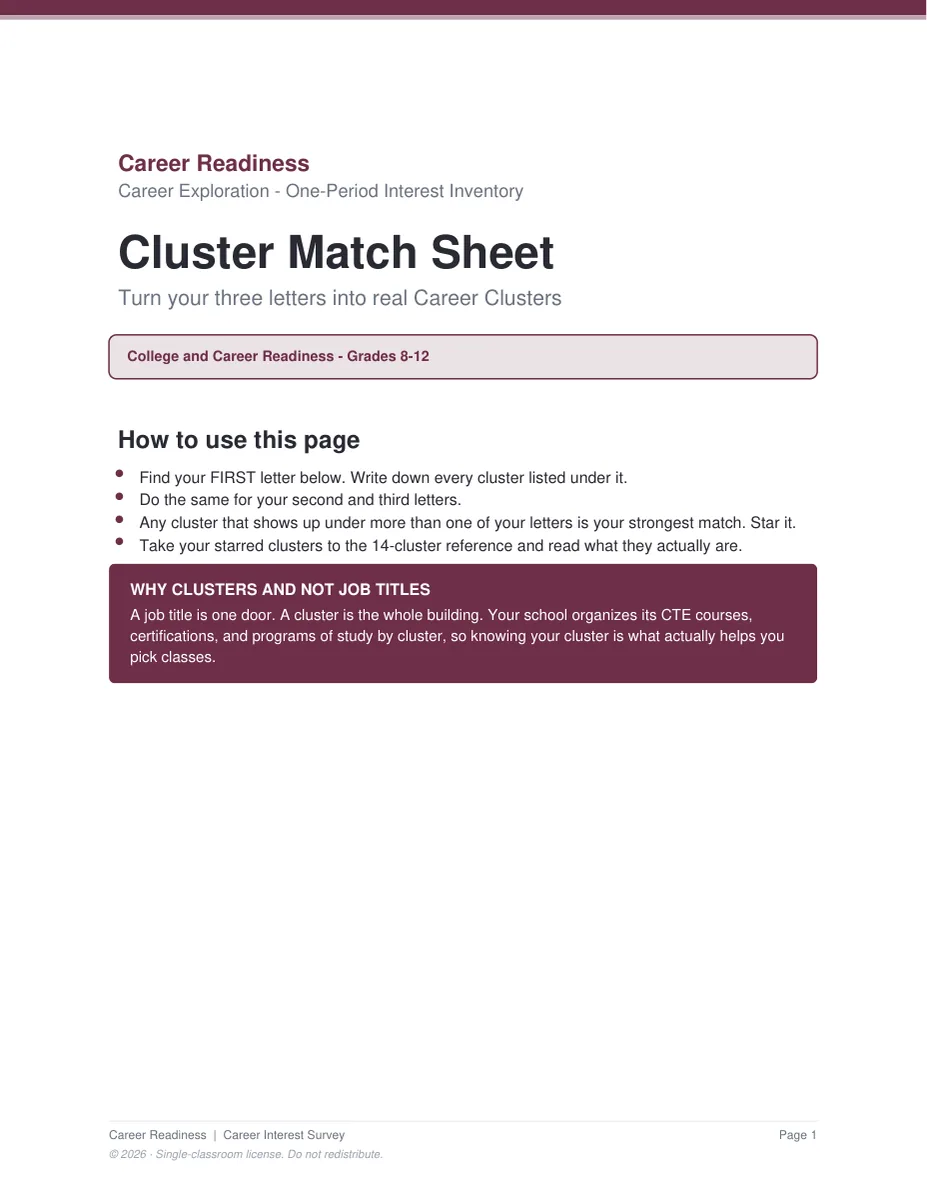
From an interest code to named clusters
This is the bridge almost every other resource skips. Your programs of study are organized by Career Cluster, not by job title, so the match sheet takes a student's top letters and hands back named clusters they can use for course selection and a four-year plan.
- ✓ Interest code to named Career Clusters
- ✓ Current 14-cluster reference included
- ✓ 16-to-14 crosswalk for the transition years
Fourteen slides that run the period
Low text, built to project, and editable. It carries the opening framing, the survey directions, the scoring walkthrough and the close, so the period runs off the screen while students work on paper.
- ✓ 14 slides, native PowerPoint
- ✓ Opens in Google Slides
- ✓ Optional: the lesson runs without it
Why teachers pick this lesson
The survey is in the fileNo outside website, no student accounts, no links to rot. It runs the same in three years as it does tomorrow.
Interest code to Career ClusterThe bridge almost every other resource skips, and the thing students actually need for course selection and a four-year plan.
 The current framework
14 clusters and 72 sub-clusters, plus a 16-to-14 crosswalk, while most of the shelf still teaches the retired 16.
Zero-tech by defaultPaper, pencil, self-scoring. Perfect for a sub plan, a testing week, or the day the wifi is down.
Class data when you want itThe Google Form version scores itself into a spreadsheet. Sort by interest code to build pairs and groups in seconds.
Honest with studentsIt says plainly that it measures what you like, not what you are good at and not what a job pays. No fake personality typing.
What Teachers Say
Be the first to review this
Reviews help me a lot, and they help other teachers pick the right resources for their classes. It takes about a minute.
Leave a reviewQuestions teachers ask
How do I get the files after I buy?
Instant download right after checkout. You get editable Word and PowerPoint, print-ready PDF of everything, and the links for the self-scoring Google Forms™.
How long does it actually take?
One class period. The plan is paced at five minutes for the opening and framing, fifteen for the survey, eight for scoring, ten for results and clusters, and seven for reflection and the close. A second-day extension is included if you want to go further, including a gallery walk and a hand-off into a career research project.
Do students need devices or accounts?
No. It runs entirely on paper, students score it themselves, and there is nothing to log into. The Google Form version is there for when you want the class data, not as a dependency.
What does the survey actually measure?
What a student likes doing. 48 items across six interest areas, rated on a 1-to-5 scale, totaled into a ranked three-letter interest code. The lesson says plainly on the first page that it does not measure what you are good at and does not tell you what a job pays.
Does it use 14 Career Clusters or the old 16?
The current 14. The framework was modernized to 14 clusters and 72 sub-clusters and states began aligning to it in 2025-26, so the reference sheets teach the 14 and a 16-to-14 crosswalk is included for working alongside an older list.
What grades is it for?
Grades 8 to 12, and it works well in middle school career exploration and advisory. It also fits CTE, career readiness and college and career readiness programs.