What's in Every Lesson
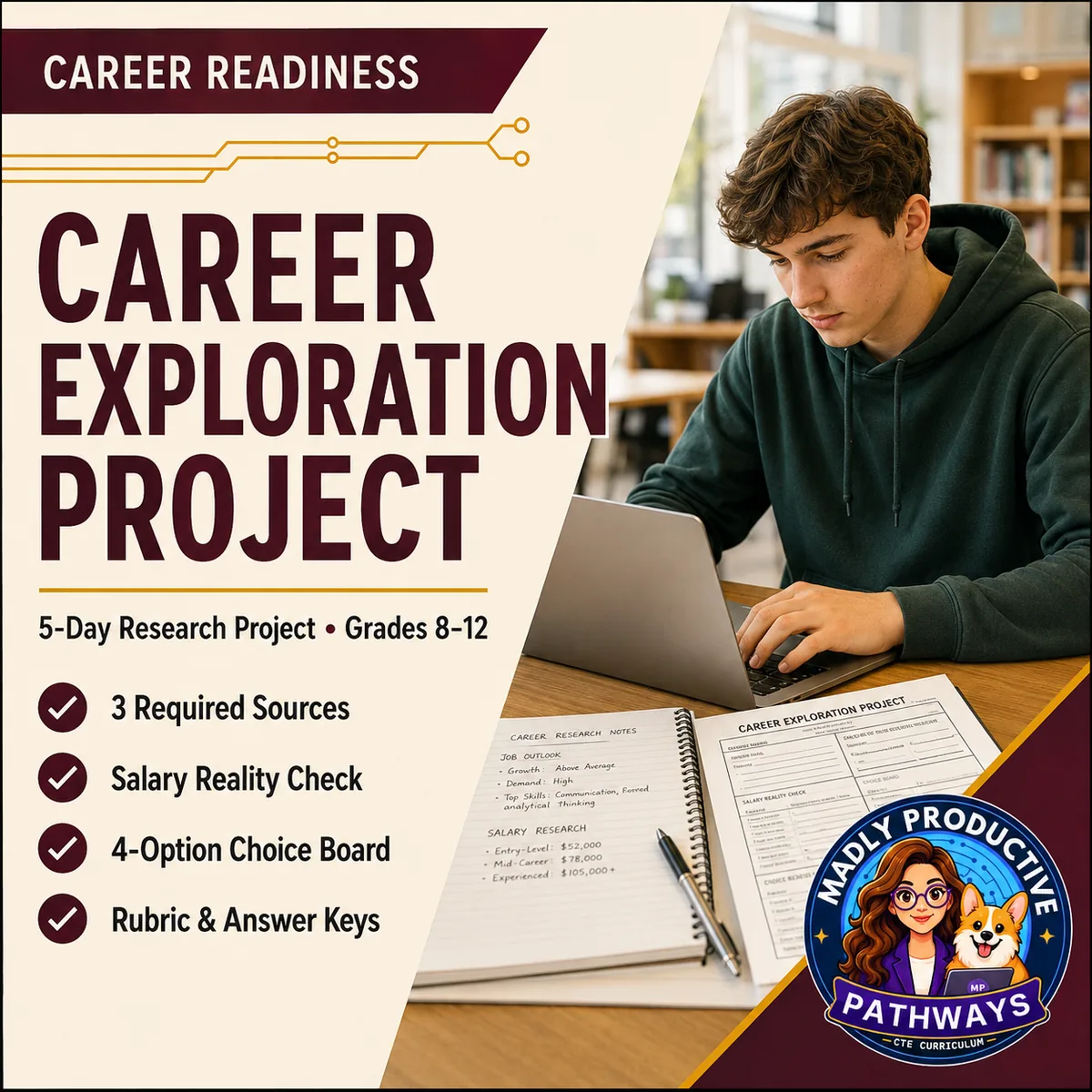
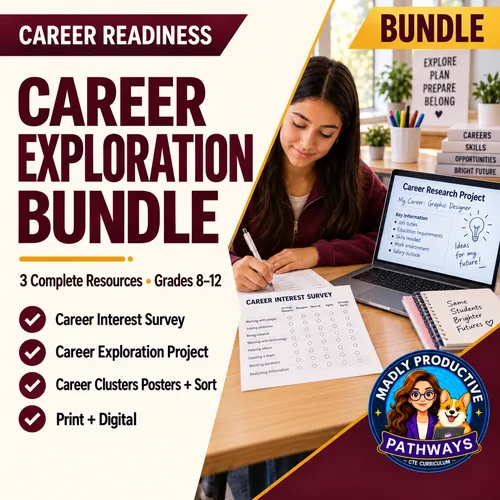
Everything in the Career Exploration Project, in one folder.






See the Actual Pages
How the week runs.
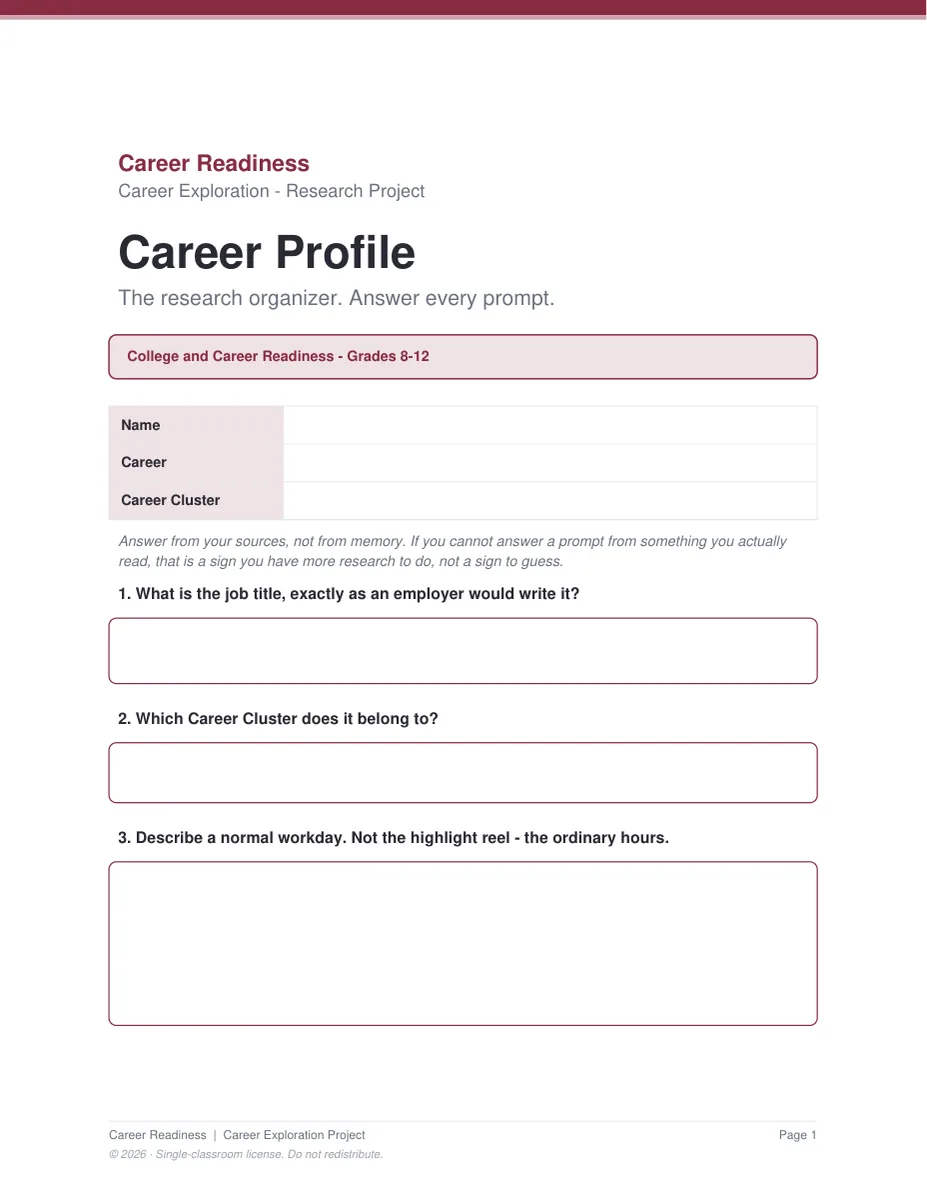
Ten prompts, two of them unfakeable
The Career Profile asks for the things a promotional video never covers: what an ordinary workday actually looks like, and one honest drawback. Students who skimmed one website cannot answer either.
- ✓ Ten research prompts
- ✓ Editable Word and print-ready PDF
- ✓ Works with or without an interest survey
Grade the honesty in thirty seconds
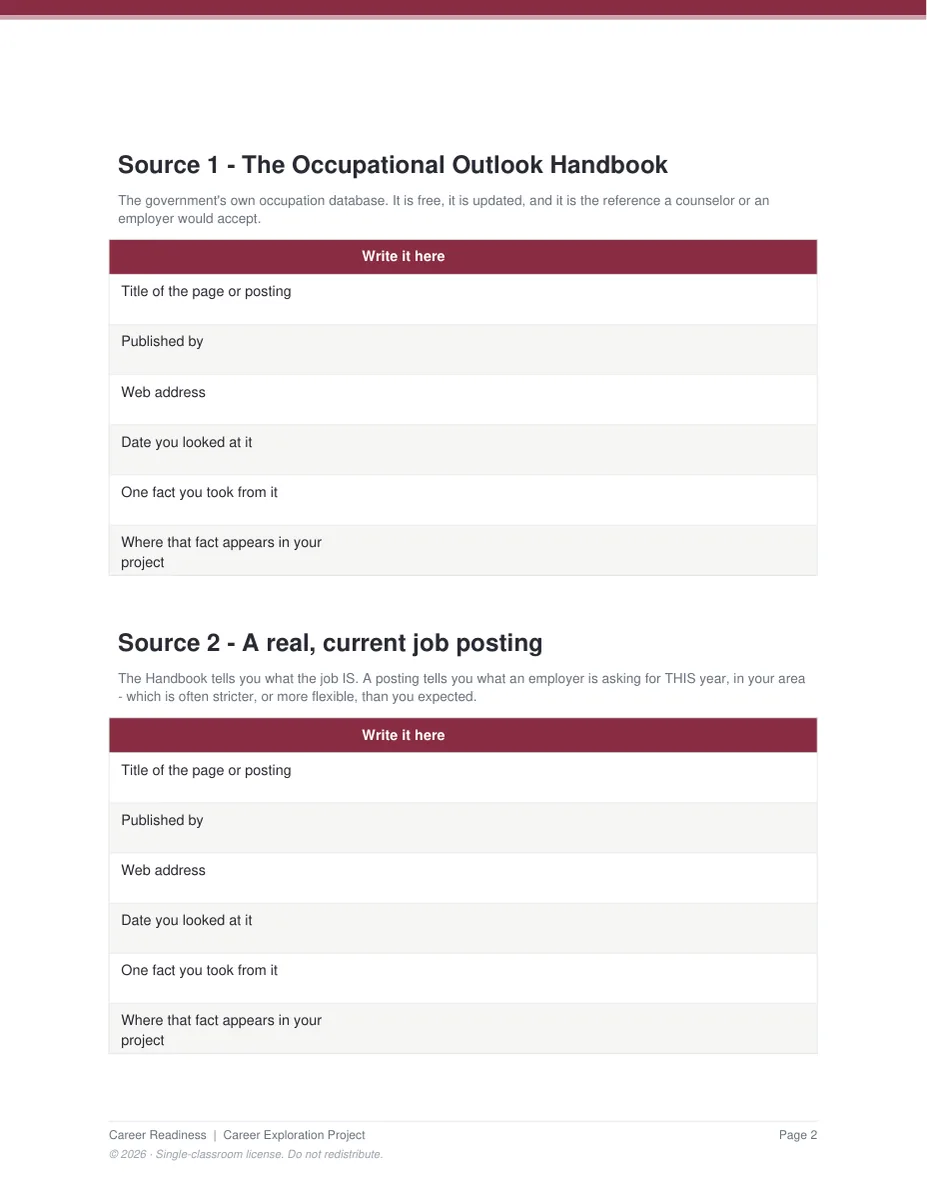
Three required sources — the Bureau of Labor Statistics Occupational Outlook Handbook, a real current job posting, and a real program of study — each logged with publisher, link, date and the fact it supports. Read the log first and you know what you are holding.
- ✓ Three required, citable source types
- ✓ Publisher, link, date and the claim it backs
- ✓ Source credibility guide: five questions, six red flags
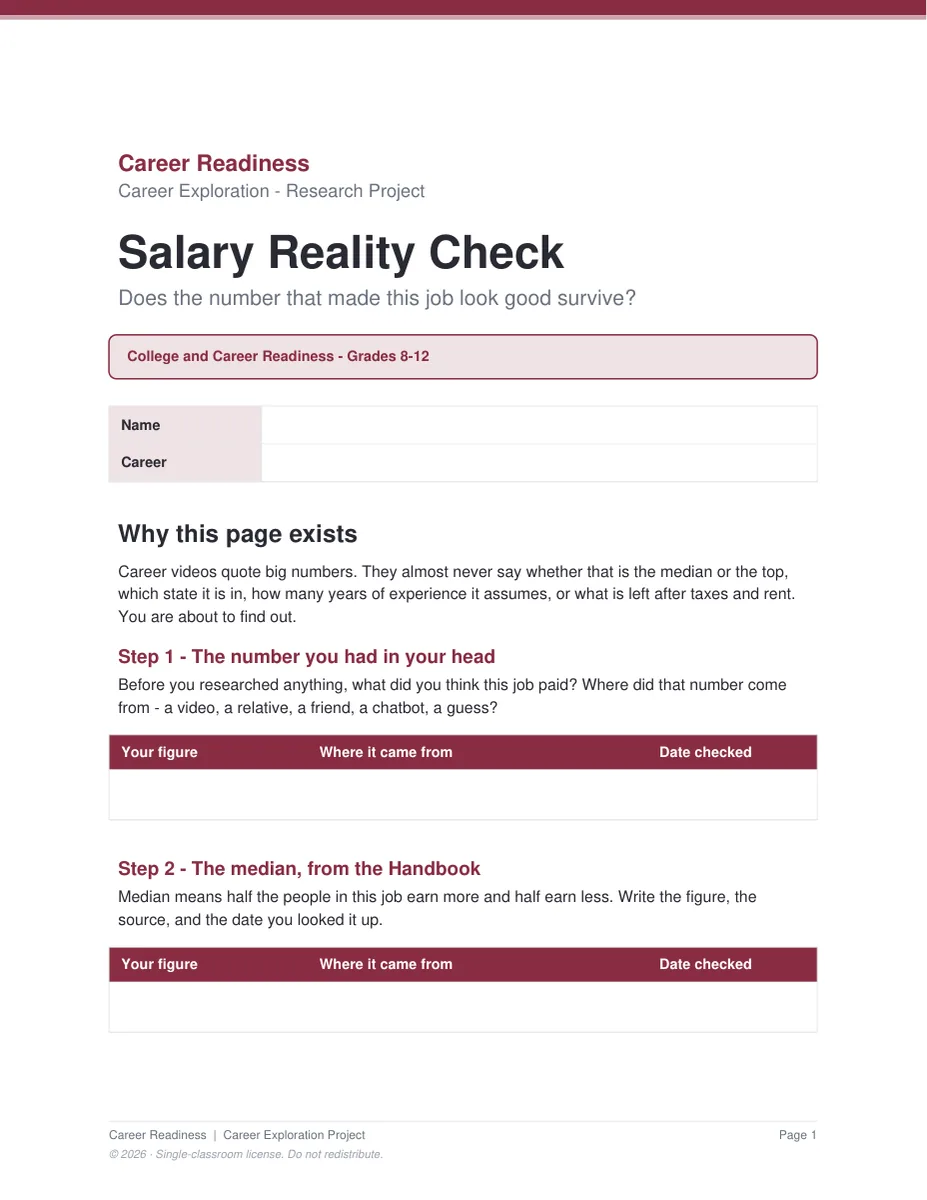
The number they assumed, against the number that is real
Students write down the figure they had in their head, find the median, find the entry-level figure, estimate take-home pay, then subtract one real local cost. Career videos almost never mention entry-level pay, and that is usually where the surprise lands.
- ✓ Assumed vs median vs entry level
- ✓ Take-home minus one real local cost
- ✓ Bridges straight into a personal finance unit
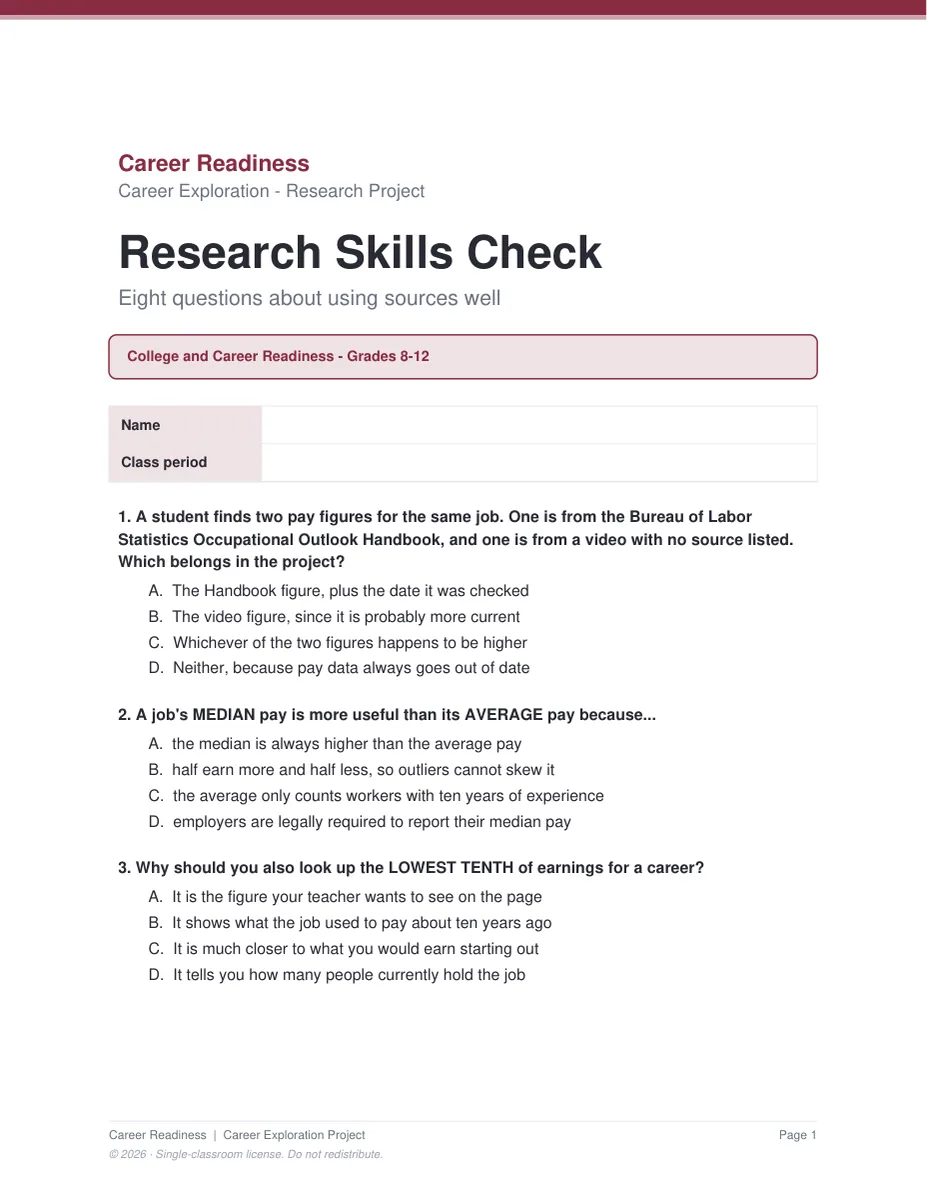
Graded without you writing it
An 8-question Research Skills Check with a written rationale for every answer, a performance task, and a five-criterion, four-level project rubric with a score sheet, plus self-grading Google Forms™ versions.
- ✓ 8-question quiz with a keyed rationale
- ✓ Five-criterion, four-level rubric and score sheet
- ✓ Self-grading Google Forms™
The 5-day plan

Plus a teacher checkpoint tracker, so a stalled project shows up on day 3 rather than on submission day.
Why Teachers Choose It

The Occupational Outlook Handbook, a real current job posting and a real program of study. That is the difference between a research project and a paraphrasing exercise.
Publisher, link, date and the fact each source supports, so you can grade the honesty of a project in thirty seconds by reading the log first.

Median against entry level, take-home against one real local cost. It is the moment the project stops being a worksheet.

The credibility guide gives students a straight answer: a fine place to start a question, a bad place to end one, and never a source for a number you cannot trace.
A choice board of slide deck, one-page brief, 60-second pitch video or interview write-up, all on one rubric, so it fits any classroom.

A Read-First guide plus both a 5-day and a 2-week pacing map, day by day, with differentiation notes.
What Teachers Say
Be the first to review this
Reviews help me a lot, and they help other teachers pick the right resources for their classes. It takes about a minute.
Leave a review